Did your hauling bill go up again this year? Landfill costs may be part of it. According to Waste Business Journal, the national weighted-average landfill tipping fee reached $72.14 per ton in July 2026, up 2.5% over the previous 12 months.
You can’t control what the landfill charges, but you may have more control over how often the truck comes to your facility. A waste audit can show whether the rest of that bill matches what you’re throwing away.
Think about the last pickup. Was the container full, or did you pay to haul a lot of empty space? You probably know what you spend on waste collection. You may not know how full your containers are when they leave the dock. Depending on how your hauling agreement is structured, that difference could be costing you money.
Here’s how to conduct a waste audit, starting with the invoices you already have.
Table of Contents
- Step 1: Pull 12 Months of Hauling Invoices
- Step 2: Check Container Fill Levels Before Pickup
- Step 3: Compare Pickups Against Fill Levels
- Step 4: Sort and Weigh Your Major Waste Streams
- Step 5: Decide What to Change
- When Should You Run a Waste Audit Again?
- How to Track Container Fullness Without Manual Checks
- Frequently Asked Questions
- Before You Buy Another Compactor, Look at the Numbers
Key Takeaways
|
1. Pull 12 Months of Hauling Invoices
Pull 12 months of hauling invoices if you have them. A full year helps account for seasonal changes and gives you a better picture of what you’re spending on business waste disposal. If your hauler provides scale tickets, include those as well. If they don’t, request them.
Look for these details on each invoice.
- Pickup Frequency: Note how often each container was emptied and whether that changed between your busiest and slowest months.
- Cost Per Pickup: Record what you paid for each pull or service visit.
- Extra Charges: Flag fees for overflow, extra service, disposal, or container rental.
- Contract Structure: Check whether you’re charged by the pull, through a fixed service fee, by weight for disposal, or a mix of these.
Then ask a few questions. Are you paying for the same number of pickups even when production slows? Has one location started requiring more service than it used to?
Contract structure matters because it determines whether changing the pickup schedule would reduce your bill.
2. Check Container Fill Levels Before Pickup
Spend a few weeks checking the containers before pickup. Have someone photograph each one and record its approximate fill level. A quarter full, half full, three-quarters full, or full is enough to start identifying patterns. Note the date of each check so you can match it to your invoices and any scale tickets. A simple log like the one below keeps the checks consistent.
| Date | Container | Fill Level | Scale Weight | Notes |
|---|---|---|---|---|
| Mon, Week 1 | Dock open-top | Half full | From scale ticket | Mostly loose cardboard |
| Thu, Week 1 | Rear trash container | Overflowing | From scale ticket | Plastic film and broken pallets |
3. Compare Pickups Against Fill Levels
Now put the hauling invoices and container observations together. Start with the containers that are emptied most often, and compare the number of pulls with how full they were when the truck arrived.
A container that’s consistently half full on pickup day may not need to be emptied as often. One that’s overflowing every Monday may need more capacity or a different collection schedule.
Check those observations against the weights on your scale tickets, where available. A container packed with loose packaging can look full without carrying much weight.
If you pay by the pull and find that one container could skip two pickups a month, that’s 24 fewer pulls a year. Multiply that by the haul portion of your per-pull charge to estimate the savings. Weight-based disposal fees won’t drop, since the same tonnage still leaves the site.
4. Sort and Weigh Your Major Waste Streams
Once you know which containers leave light or overflowing, find out what’s filling them. Before sampling, check with your safety or EHS team on procedures and which materials to exclude, such as hazardous or medical waste.
Start by walking the route your waste takes, from where it’s generated to where it leaves the facility. You may find cardboard going into general trash, employees spending time breaking down boxes, or bulky packaging taking up space that could be used more efficiently.
A grocery store’s waste can look very different from what you’d find at a distribution center or manufacturing plant. Food waste, cardboard, plastic film, pallets, and production scrap all present different handling challenges, and the mix can vary even within one facility.
Choose a few representative days and examine samples from your major waste streams. Separate the material into categories and weigh it where practical. Komar’s materials index covers common streams, including cardboard, foam, wood, general trash/msw, and textiles.
5. Decide What to Change
Use what you found in Steps 3 and 4 to decide where to start. The simplest fixes usually come first.
- Adjust the schedule. If containers regularly leave half full, reducing pickup frequency may be the quickest change.
- Separate recyclables. If cardboard is filling the trash, separating it for recycling could free up capacity.
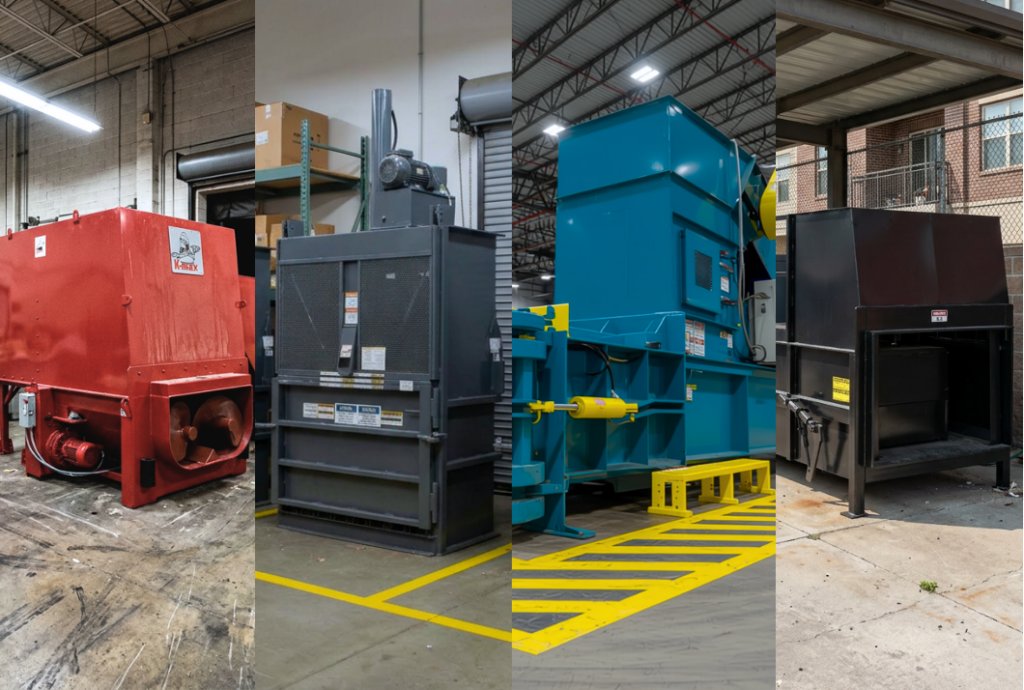
- Look at equipment. If you’re dealing with frequent overflow, or the material itself is taking up the space, it may be time to consider different equipment.
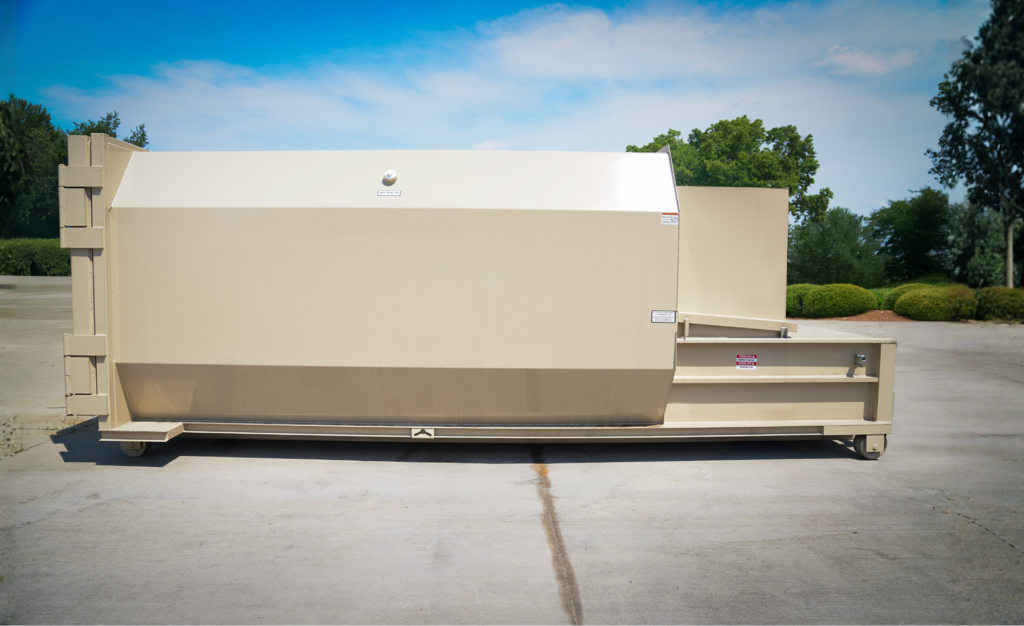
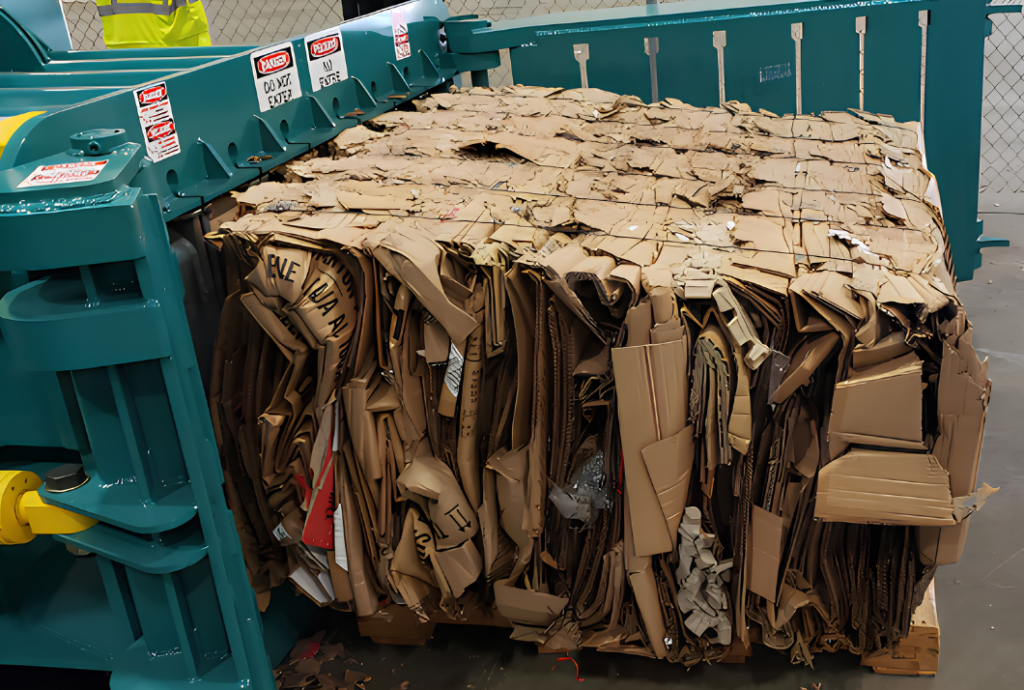
Loose cardboard and plastic film can fill a container quickly without adding much weight. Depending on the volume and application, a compactor or auger compactor may help reduce the space that material occupies. A baler may be a better choice when recyclable cardboard or other recoverable materials can be kept separate.
Before counting on savings, check your contract. Fewer pickups won’t necessarily lower the bill if you’re paying a fixed service charge.
| Want help evaluating your waste streams? Komar offers a free waste stream evaluation to identify the right equipment and processes for your space, waste types, and volume. Schedule a free waste stream evaluation |
When Should You Run a Waste Audit Again?
Waste volume changes over time, whether from a new production line, a packaging change, or a different supplier. Yet the same equipment and hauling schedule may stay in place for years. Once you’ve established a baseline, you’ll have something to compare against when those changes occur.
A yearly review is a reasonable baseline, with another look whenever production, packaging, or hauling arrangements change significantly. You don’t necessarily need to repeat the entire sorting process every time. Reviewing invoices, weights, and container fullness is usually enough to catch changes early.
How to Track Container Fullness Without Manual Checks
Photographing containers for a few weeks is manageable. Doing it indefinitely, across multiple facilities, usually isn’t.
Komar’s iSMART Technology™ provides visibility into equipment status, fullness levels, and cycle counts through the iSMART™ Hub. That information can help facilities determine when containers need service rather than relying entirely on fixed pickup schedules. Depending on the configuration, iSMART™ can also identify abnormal operating patterns and provide usage-based preventive maintenance notifications.
iSMART™ can be installed at the factory or added through an external retrofit module compatible with most major brands.
For facilities managing multiple machines or locations, ongoing equipment data can make it easier to review hauling schedules, track usage, and plan maintenance.
Want to see what fill-level data could show for your equipment? Talk to a Komar equipment specialist about monitoring options for your current compactors and balers.
Frequently Asked Questions
What is a waste audit?
A waste audit is a structured review of what your facility throws away, how much of it there is, and what it costs to remove. For most commercial facilities, it compares hauling invoices, container fill levels at pickup, and the makeup of each waste stream. The EPA calls a similar process a waste assessment.
How do you conduct a waste audit?
Pull 12 months of hauling invoices, then record container fill levels before pickup for a few weeks. Compare the number of pickups against how full the containers were, sort and weigh samples from your major waste streams, and decide what to change based on what you find.
How often should a business conduct a waste audit?
Once a year is a reasonable baseline for most facilities. Plan another review whenever production, packaging, suppliers, or hauling arrangements change significantly.
How long does a waste audit take?
Plan on a few weeks, plus a few days for sampling. The invoice review moves quickly once you have the records, but fill-level tracking needs several pickups to show reliable patterns.
Can a waste audit lower hauling costs?
It can, depending on how your hauling agreement is structured. If you pay by the pull, cutting unnecessary pickups can reduce your bill, but fewer pickups won’t change a fixed service charge.
What’s the difference between a waste audit and a waste stream evaluation?
The first is a review your own team can run using invoices, container checks, and material sampling. Komar’s free waste stream evaluation looks at your waste types, volume, and available space to identify the right equipment and processes for your facility.
Before You Buy Another Compactor, Look at the Numbers
If your waste audit shows that volume has grown, the material has changed, or the current setup requires too much handling, the next question is whether your equipment still fits.
Komar works with facilities to evaluate their waste streams, available space, material volumes, and operating requirements before recommending equipment. Depending on the application, that could mean a stationary, self-contained, or vertical compactor, a baler, an auger compactor, or changes to the way material is handled. You may find that what you already have is doing the job.
Bring your waste audit results to a free waste stream evaluation, and a Komar equipment specialist can confirm whether your current setup still fits.