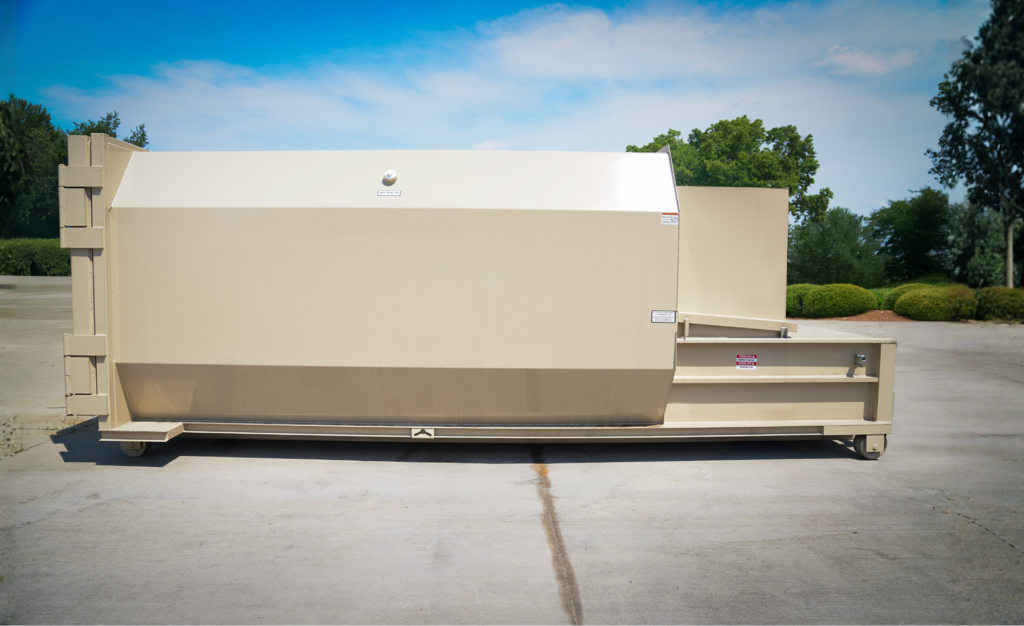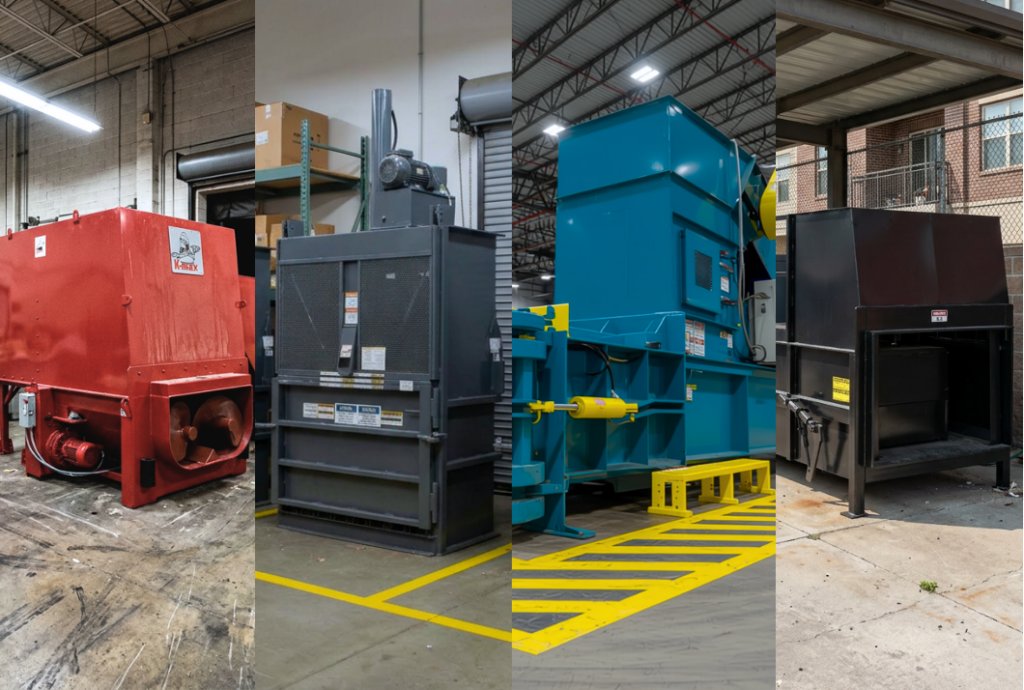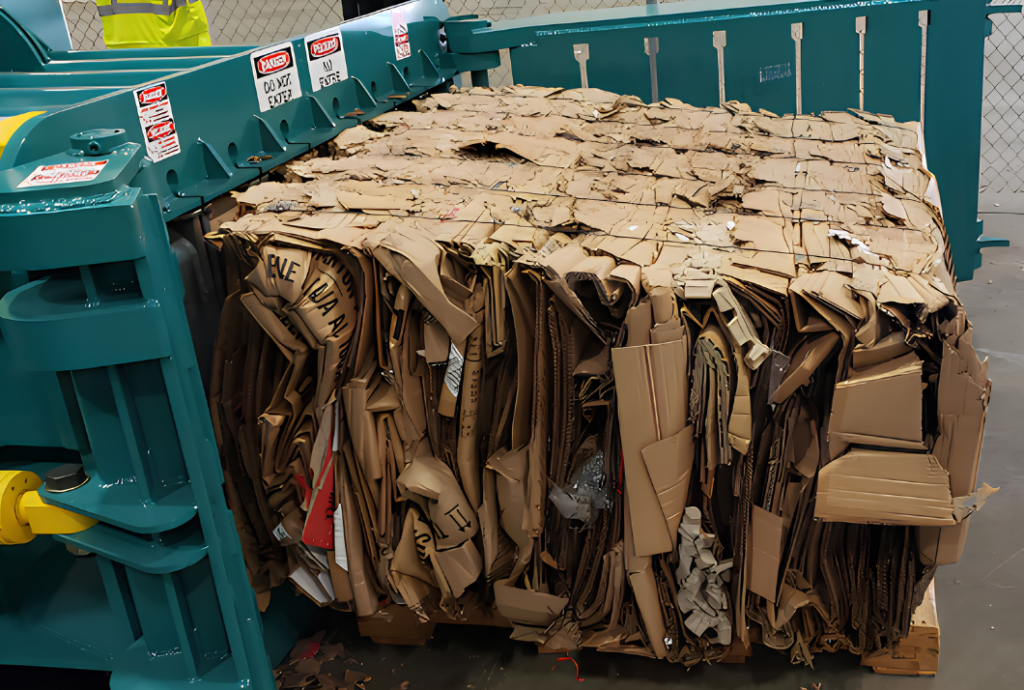
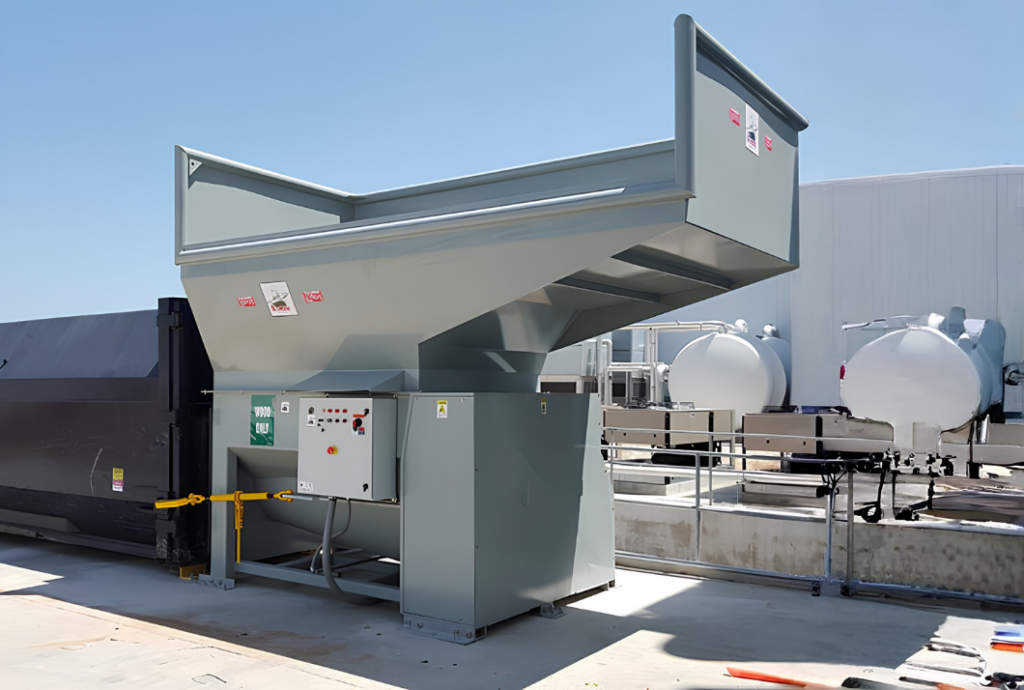
Walk the back of most distribution centers, manufacturing facilities, warehouses, or other industrial operations,and you will often find the same challenges at the dock door: broken pallets, wood crates, and large volumes of cardboard waiting for disposal. These bulky materials consume valuable space, require labor to manage, and drive hauling costs higher when containers are not packed efficiently.
If you are managing wood waste and high volumes of cardboard, a standard trash compactor is often the wrong tool for the job. Wood waste, including pallets, crates, and other bulky materials, can be difficult to compact and often contain nails or other fasteners. High volumes of cardboard can quickly consume container capacity and create handling challenges of their own. This is where an auger compactor was designed to excel.
Table of Contents
- Why Wood Waste Requires a Different Approach
- How an Auger Compactor Works
- The Operational and Financial Payoff
- Matching the Auger to Your Waste Stream
- Frequently Asked Questions
Why Wood Waste Requires a Different Approach
Standard stationary compactors use a hydraulic ram to push material forward in a straight line. While effective for many waste streams, bulky wood materials such as pallets and crates can be more difficult to process efficiently.
Because wood is rigid and resilient, traditional ram compactors often break and rearrange material rather than densely packing it. The result can be lower payload weights, inconsistent compaction, and increased wear on equipment components.
For high-volume wood waste applications, auger compactors provide a different approach. By continuously grabbing, fracturing, and compressing material, they help maximize container utilization while reducing many of the operational challenges associated with wood waste disposal.
How an Auger Compactor Works
An auger compactor uses a large rotating screw instead of a hydraulic ram. As the screw turns, it grinds and crushes material, then drives it under pressure into the container. The corkscrew action breaks down wood waste, pallets, crates, thick corrugated containers, and large volumes of cardboard that can be difficult to process efficiently in traditional compaction systems.
Because the screw works continuously and does not rely on a single forward stroke, it keeps feeding and packing material without the interruptions often associated with bulky waste streams. Wood waste, cardboard, gaylord flats, and other bulky materials are broken down so the container fills evenly and densely.
Placement at the Dock Door
Most Komar auger compactors run on electric power and sit right at the dock or a designated waste door, so material goes straight from the floor into the unit. That short path is part of the labor savings, because staff are not hauling pallets across the yard or feeding a machine that constantly backs up. Conveyor-fed automation can further reduce labor requirements and/or manual handling requirements while supporting continuous material processing. Each system can be tailored around the facility’s available space, waste stream, and operational requirements.
Contact a Komar specialist to review your waste stream and recommend the configuration that matches what actually comes off your dock.
The Operational and Financial Payoff
An auger compactor is a significant capital investment, so the business case extends beyond the haul bill. The right system can reduce labor and material handling requirements, eliminate hydraulic components, process difficult waste streams efficiently, and maximize container payloads. Together, these advantages can lower total operating costs and improve the consistency of a facility’s waste handling operation.
Higher payloads mean fewer container pulls, fewer trips, and lower transportation and disposal costs. Whether material is hand-loaded, forklift-fed, or integrated into an automated handling system, auger compactors are designed to continuously break down and compact material to improve container utilization and operational efficiency.
- Resource Reduction: Efficient material processing and flexible system configurations can reduce labor and material handling requirements.
- Hydraulic-Free Operation: Electric auger systems eliminate the hydraulic components found in traditional ram compactors.
- Payload Optimization: Auger systems break down and compact bulky materials to improve container utilization and move more material per haul.
- Pull Charge Reduction: Fewer container pulls can reduce transportation costs, fuel surcharges, and operational disruptions.
- Consistent Processing: Continuous auger operation helps maintain material flow and efficiently process high volumes of wood waste and cardboard.
- Cleaner Material Handling: Enclosed compaction can help reduce loose material and housekeeping concerns around the loading area.
For OCC, efficient processing helps prepare recyclable material for transportation to recyclers, paper mills, material recovery facilities (MRFs), and other downstream processors. For wood waste, the primary advantage is often economic: higher payloads and fewer trips can reduce transportation and disposal costs. When a recycling or secondary-use market exists, wood waste may also be diverted from landfill through reuse, chipping, or other recovery processes.
Matching the Auger to Your Waste Stream
The right auger depends on the material being processed, throughput requirements, and facility layout. Wood waste, high volumes of corrugated cardboard, mixed waste streams, and product destruction applications can each require different auger models or configurations.
Single-screw augers handle most wood waste, cardboard, mixed paper, and mixed waste streams efficiently. Higher-throughput streams may call for a different configuration or a larger unit. The goal is to size the commercial equipment to your peak volume, not your average, so the machine is never the bottleneck at your busiest hour.
Proper sizing is only part of the equation. Material characteristics, throughput requirements, facility layout, and long-term service support all influence system performance. Komar engineers, builds, installs, and services its compaction equipment through a factory-direct service network, helping ensure the system is configured for the application and supported throughout its service life.
Before you spec a unit, have a Komar equipment specialist run the numbers on your wood waste, cardboard volumes,labor requirements and throughput needs, so the auger is sized to your real operation, not a rough estimate.
Frequently Asked Questions
How do I dispose of wood waste at scale?
For steady, high volumes, an auger compactor is often an effective solution. Its rotating screw breaks down wood waste such as pallets and crates and packs material densely into a container, helping reduce transportation and disposal costs. .
When should I use an auger compactor?
Use an auger compactor when your waste stream is bulky or difficult to compact, such as wood waste, cardboard, mixed paper, or mixed waste. It is the right tool when a standard ram compactor cannot process efficiently, jams, packs lightly, or requires frequent pulls.
How much can an auger compactor reduce hauling costs?
The savings come from higher payload per haul, which reduces the number of container pulls. Facilities handling bulky waste streams often realize the greatest savings through reduced material handling, lower labor requirements, and reduced transportation and pull charges.
Stop Fighting the Pile at the Dock
Wood waste and high volumes of cardboard are more than a housekeeping challenge. They consume valuable labor resources, take up space, and can drive transportation and disposal costs higher when not handled efficiently. Managing those waste streams effectively requires durable equipment that can continuously break down material, maximize container utilization, and support the way your operation actually works.
An auger compactor is designed to do exactly that. When properly sized and configured, it can reduce labor requirements, improve payload efficiency, and create a more consistent waste handling process. The best results come from matching the system to the waste stream, throughput requirements, and operational goals. That is why proper application review, sizing, and long-term service support are just as important as the equipment itself.
Contact a Komar equipment specialist to assess your wood waste, cardboard, and mixed waste volume and specify an auger compactor built and serviced to keep your dock moving.