The choice between a vertical baler and a horizontal baler determines equipment efficiency, labor costs, and material recovery value for years. Both compress cardboard, paper, plastic, and other recyclable materials into dense, saleable bales, but they operate differently, serve different waste volumes, and have distinct cost structures.
A three-person team at a retail distribution center has different needs than a 40-person plastic recycling operation. The right choice depends on weekly waste volume, available floor space, bale weight preferences, and labor availability. This guide compares both types so you can evaluate which works best for your facility.
Table of Contents
- How Vertical and Horizontal Balers Work
- Capacity and Volume Thresholds
- Space and Installation Requirements
- Bale Weight and Transportation Economics
- Operator Involvement and Training
- Maintenance, Reliability, and Service
- Total Cost of Ownership Comparison
- Industry-Specific Recommendations
- Frequently Asked Questions
How Vertical and Horizontal Balers Work
Before comparing vertical and horizontal balers on cost, throughput, and footprint, it helps to understand how each machine actually works. The two designs share the same basic purpose, compressing loose recyclables into transportable bales, but they approach the job from different angles, literally.
One compresses material from the top down; the other, from one side to the other. Those orientations shape everything else: how operators load the machine, how much training they need, and how dense the finished bales come out.
Vertical Baler Design and Operation
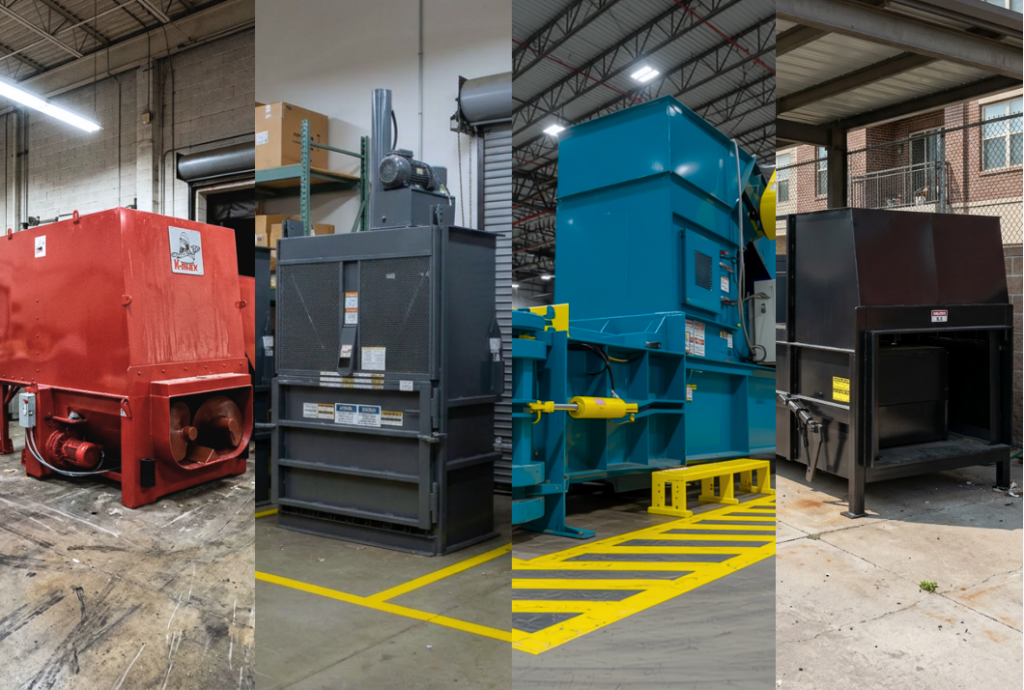
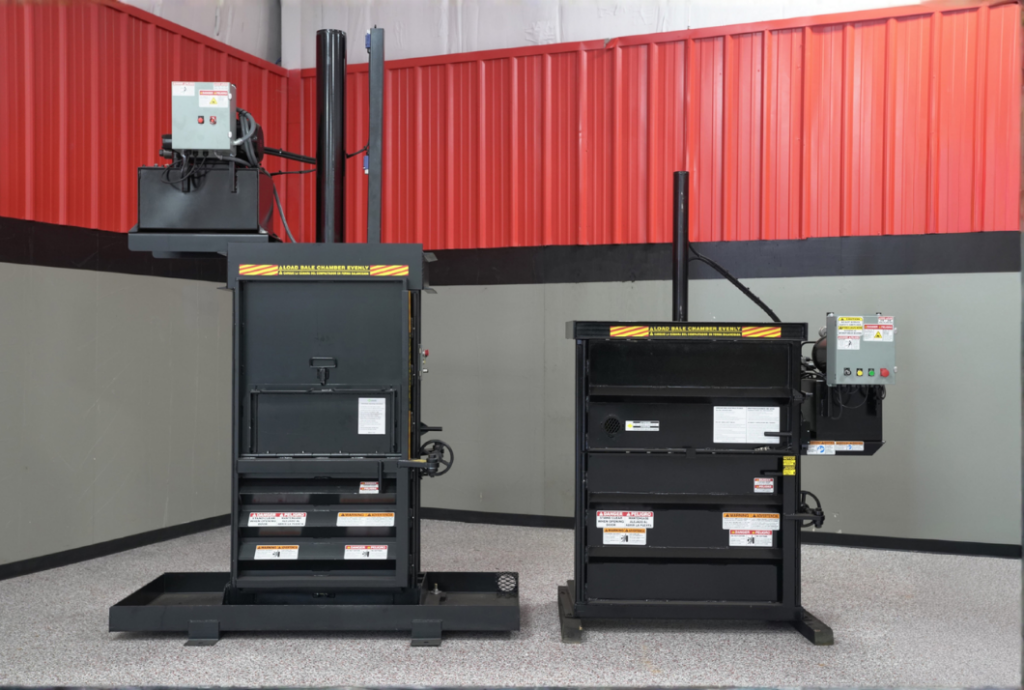
A vertical baler features a vertically oriented bale chamber and typically, a front-mounted feed opening. Loose recyclable materials such as cardboard, plastic film, paper, or aluminum cans are loaded into the chamber while the safety gate is open and the hydraulic ram is in the up or raised position. When activated, the hydraulic ram descends, compressing the material into the bale chamber. Multiple loading and compression cycles are performed until the desired bale size or density is reached. The completed bale is then tied and ejected from the machine for storage, transport, or recycling.
One of the biggest advantages of a vertical baler is its simplicity. Operators load recyclable materials into the machine, initiate the compaction cycle, and continue adding material until a full bale is formed. With minimal training required for daily operation, vertical balers are well-suited for retail stores, warehouses, distribution centers, or other facilities looking to improve recycling efficiency without adding operational complexity.
Horizontal Baler Design and Operation
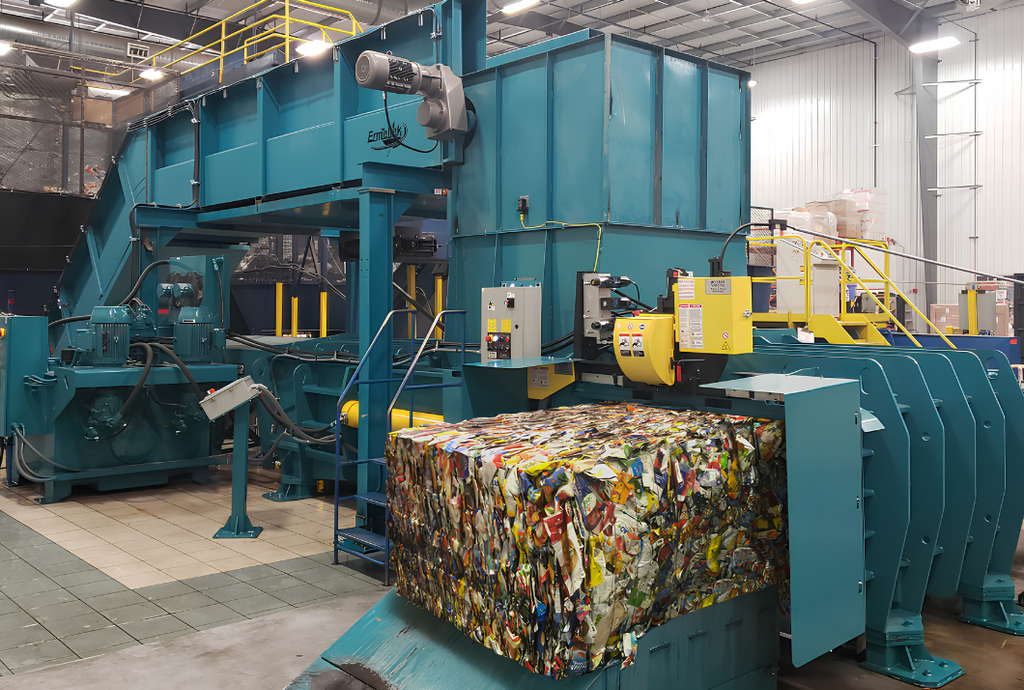
A horizontal baler features a horizontal compression chamber that is typically fed through a hopper, chute, conveyor, or other loading system. Material enters the chamber and is compressed horizontally by a hydraulic ram into a dense bale. Depending on the baler design, bale tying may be manual, or fully automatic. Finished bales are discharged from the baler and processing continues, making horizontal balers well suited for high-volume recycling operations.
Horizontal balers are typically more sophisticated systems than vertical balers and often incorporate conveyors, hoppers, cart tippers, and automated bale tying technologies. While they generally require a higher capital investment and more facility integration, many models automate material feeding, bale tying, and bale discharge, reducing operator involvement during normal operation. For facilities generating large volumes of recyclable material, this automation can improve throughput, labor efficiency, bale consistency, and bale density.
Capacity and Volume Thresholds
Capacity is usually the first and most important factor in choosing between a vertical and horizontal baler. Throughput determines not just whether a machine can keep up with your waste stream, but also how often bales need to be handled, stored, and hauled away.
The gap between the two baler types is significant. A horizontal baler can process several times the weekly tonnage of a vertical baler while producing substantially larger and heavier bales. Understanding where your operation falls on that spectrum is the clearest way to match equipment to need.
Vertical Baler Capacity
Vertical baler capacity varies by model, material type, and operating conditions. In many applications, vertical balers can effectively process up to 15 tons of recyclable material per week, although larger commercial models may be capable of handling higher volumes.
If your operation generates low to moderate volumes of recyclable material per week and your waste stream consists primarily of cardboard, mixed paper, aluminum cans, or plastic film, a vertical baler is often a practical and cost-effective solution. These machines are commonly used in retail stores, grocery locations, warehouses, manufacturing facilities, and smaller distribution centers where space, budget, and operational simplicity are important considerations.
Horizontal Baler Capacity
Horizontal balers are designed for high-volume recycling operations and can process substantially more material than a typical vertical baler. Capacity varies by baler type, material stream, feeding method, and operating schedule, with larger systems capable of supporting continuous processing environments.
Larger bale sizes can improve transportation efficiency by maximizing trailer payloads and reducing material handling requirements. For facilities generating high volumes of recyclable material, these operational efficiencies can help justify the higher initial investment associated with a horizontal baler.
When to Cross the Threshold
A common crossover point occurs between 12 to 15 tons per week. Below this volume, a vertical baler is more cost-effective. Above this volume, many facilities begin evaluating horizontal balers because their higher capacity, increased automation, and transportation efficiencies may begin improving overall operating economics.
The economics also depend on material revenue: if recyclers pay premium prices for heavier, denser bales, the threshold shifts lower.
Some high-volume operations run both. A facility generating 30 tons weekly might run two vertical balers for flexibility and redundancy, while another operates a horizontal baler for raw capacity. The choice depends on materials, feed consistency, space, and operational preference.
Space and Installation Requirements
Vertical balers are designed to fit into relatively compact spaces and are commonly installed in stockrooms, loading docks, warehouses, and manufacturing facilities. Installation typically requires a level concrete floor, adequate electrical service, and sufficient overhead clearance for the machine’s overall height and operation. Exact space requirements vary by model, bale size, and configuration.
Horizontal balers require more floor space than vertical balers and often include additional equipment such as feed conveyors, hoppers, cart tippers, or other material handling systems. Total space requirements depend on the baler configuration, feeding method, and overall facility layout.
Horizontal balers typically require three-phase electrical service and may also utilize compressed air systems depending on the machine design and level of automation.
Horizontal balers are less flexible for retrofits and are typically installed in dedicated processing areas or warehouse sections designed for waste handling. The additional space and installation complexity are often acceptable trade-offs in high-volume facilities where the equipment operates continuously.
Bale Weight and Transportation Economics
Vertical balers typically produce bales weighing up to 1,500 pounds, depending on the baler model, material type, and bale dimensions. Many commercial vertical balers produce dense, marketable bales that are readily accepted by recyclers and paper mills. For retail stores, grocery locations, warehouses, and smaller distribution centers, this allows recyclable material to be consolidated into a dense, marketable bale while maintaining a relatively simple and cost-effective recycling operation.
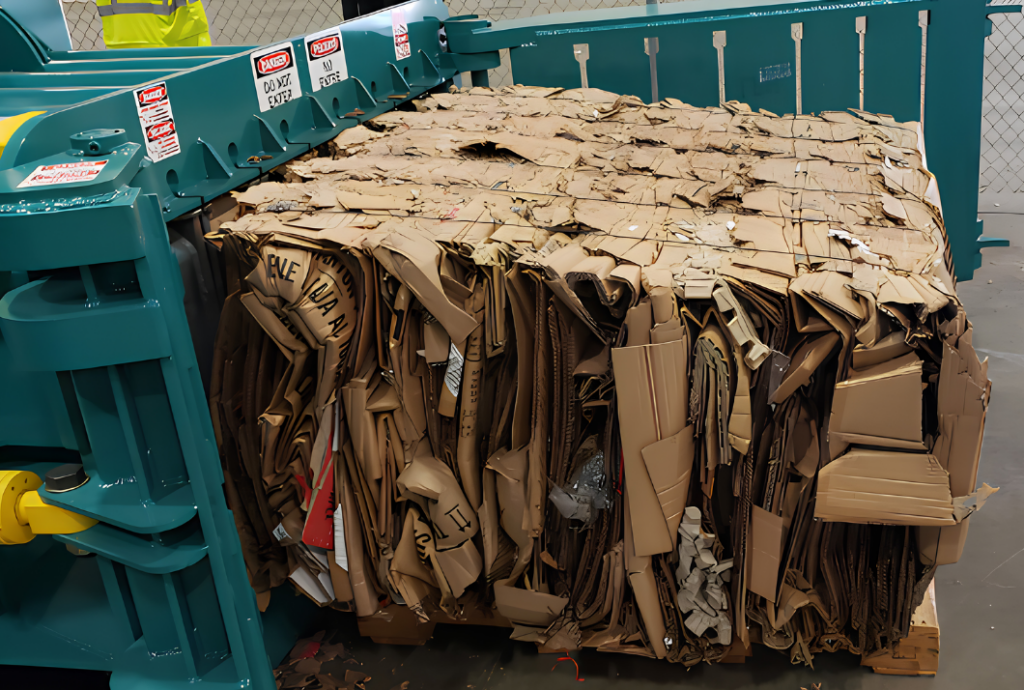
Horizontal balers typically produce bales weighing between 1,500 and 3,000 pounds, depending on the baler design, material type, and operating conditions. Larger open-end auto-tie and two-ram balers may produce even heavier bales in certain applications. The increased bale weight and density can improve transportation efficiency by maximizing trailer payloads and reducing the number of bales that must be handled and stored. For facilities generating high volumes of recyclable material, these efficiencies can help lower transportation and labor costs while improving overall recycling economics.
Operator Involvement and Training
Vertical balers typically do not require a dedicated operator. In many retail stores, warehouses, grocery locations, and manufacturing facilities, employees operate the baler as part of their normal responsibilities. Material is loaded through the feed opening, compressed through a series of cycles, and tied and ejected once the bale is complete. Because the operating process is relatively straightforward, most employees can become comfortable with basic operation after a short period of training.
Horizontal balers generally require more operational oversight than vertical balers, although labor requirements vary significantly based on the baler’s level of automation. Operators may be responsible for monitoring material flow, managing wire supplies, clearing jams, and maintaining consistent throughput. Facilities using automated feed systems, automatic tying, and advanced controls can often reduce day-to-day operator involvement while maintaining high production rates.
| Not sure which baler fits your operation? Contact a Komar equipment specialist to review your waste volume, material type, and facility layout. We’ll recommend the equipment that delivers the best return on investment.Visit komarindustries.com or speak with your regional Komar representative to get started. |
Maintenance, Reliability, and Service
Vertical balers are mechanically simple. Fewer moving parts mean fewer failure points. Routine maintenance typically includes monitoring hydraulic fluid levels, inspecting hoses and fittings, lubricating moving components, and replacing wear items as needed. Downtime is typically short when failures occur, and spare parts are readily available.
Horizontal balers are more complex: automatic feed systems, bale density controls, pressure relief valves, and more hydraulic circuits. Maintenance is more involved and typically requires trained technicians and specialized tools. That said, modern horizontal balers from quality manufacturers are highly reliable when properly maintained. Maintenance requirements vary based on usage, operating conditions, and the level of automation within the system.
Total Cost of Ownership Comparison
Purchase price is only one component of a baler’s total cost of ownership. Labor requirements, maintenance costs, hauling expenses, available floor space, and potential revenue from recyclable materials all influence the long-term economics of a recycling program.
In general, vertical balers require a lower initial investment and are often the most economical choice for facilities generating modest volumes of recyclable material. Horizontal balers typically require a greater upfront investment but may provide operational savings through higher throughput, improved transportation efficiency, and increased automation.
Because every facility’s waste stream, labor structure, hauling costs, and recycling revenue opportunities are different, the best way to evaluate total cost of ownership is to compare equipment options against your specific operating requirements and material volumes.
Industry-Specific Recommendations
Retail stores, grocery locations, and smaller warehouses are often well served by vertical balers. Their compact footprint, lower upfront investment, and straightforward operation make them a practical choice for facilities generating modest volumes of recyclable material.
Large distribution centers, e-commerce fulfillment operations, and recycling facilities often benefit from horizontal balers when recyclable volumes justify the additional capacity and automation. Increased throughput and transportation efficiencies can help offset the higher initial investment.
Some facilities utilize both technologies. For example, a distribution center may operate a horizontal baler for high-volume cardboard while using a vertical baler for plastic film or other segregated recyclable streams. The right solution depends on the materials being processed, generation volumes, available space, and operational requirements.
Frequently Asked Questions
Should I choose a vertical baler or a horizontal baler?
Vertical balers are often a practical choice for facilities generating modest volumes of recyclable material, operating with limited floor space, or seeking a lower-cost and simpler recycling solution. Horizontal balers are often preferred in higher-volume applications where throughput, automation, and transportation efficiency become increasingly important. The right choice depends on your material stream, volume, available space, and operational goals.
What waste volume justifies a horizontal baler?
A common crossover point occurs around 12 to 15 tons of recyclable material per week, although the actual threshold varies by application. Material type, labor costs, hauling expenses, available space, and recycling revenue opportunities can all influence when a horizontal baler becomes the more economical choice.
How much space do I need for each baler type?
Space requirements vary by model and configuration. Vertical balers are generally designed for facilities with limited available space and are commonly installed in stockrooms, loading docks, warehouses, and manufacturing facilities. Horizontal balers typically require more floor space and may include additional equipment such as conveyors, hoppers, cart tippers, or other material handling systems. Installation requirements should always be evaluated based on the specific equipment model, configuration, and facility layout.
How much operator involvement is required?
Vertical balers typically do not require a dedicated operator and are often operated by employees as part of their regular responsibilities. Horizontal balers generally require more operational oversight, although labor requirements vary significantly based on the level of automation. Automated feed systems, automatic bale tying, and advanced controls can reduce day-to-day operator involvement in many horizontal baling applications.
| Ready to invest in the right baler for your operation? Reach out to a Komar equipment specialist to discuss capacity, space, and cost-of-ownership projections for your facility.Visit komarindustries.com or contact your regional Komar representative to schedule an assessment. |