Public works departments across North America are working through the same problem. Waste processing equipment installed 15 or 20 years ago is reaching the end of its reliable operating life, environmental regulations are tightening, and the cost of reactive maintenance on aging infrastructure is climbing.
At the same time, modern recycling balers, compactors, and monitoring systems have advanced significantly. The operational and financial case for equipment upgrades is stronger than it has been in years.
Key Takeaways
|
Why Municipal Waste Equipment Modernization Is Accelerating
Several forces are converging to push municipal waste management operations toward equipment upgrades.
Aging Infrastructure and Rising Maintenance Costs
Equipment installed in the 2000s or earlier is increasingly difficult to maintain. Parts availability narrows as machines age. Service technicians with knowledge of older models become harder to find.
Emergency service costs climb as components fail more frequently.
For many public works departments, annual maintenance spend on aging equipment has exceeded a threshold that makes replacement the more cost-effective option, even when capital budgets are constrained.
Evolving Environmental Regulations
State and local regulations around recycling diversion, material recovery, and waste reporting have become more demanding. Older equipment may not meet current processing standards or material purity requirements for certain commodities.
Facilities that cannot meet material quality specifications lose access to the recycling markets that make diversion programs financially viable.
Operational Efficiency Targets
Municipal waste operations are under the same pressure as every other public service: do more with the same or fewer resources. Modern recycling balers process higher volumes with less labor input. IoT monitoring reduces emergency service calls. Automated systems reduce manual handling requirements.
The productivity gap between aging equipment and modern configurations is measurable and directly affects how much a department can process with its existing workforce.
| Komar’s municipal equipment specialists work with public works departments to specify horizontal balers matched to their program’s throughput and material mix. If you are planning a recycling center upgrade, contact us to help build your business case. |
Modern Equipment Configurations for Municipal Waste
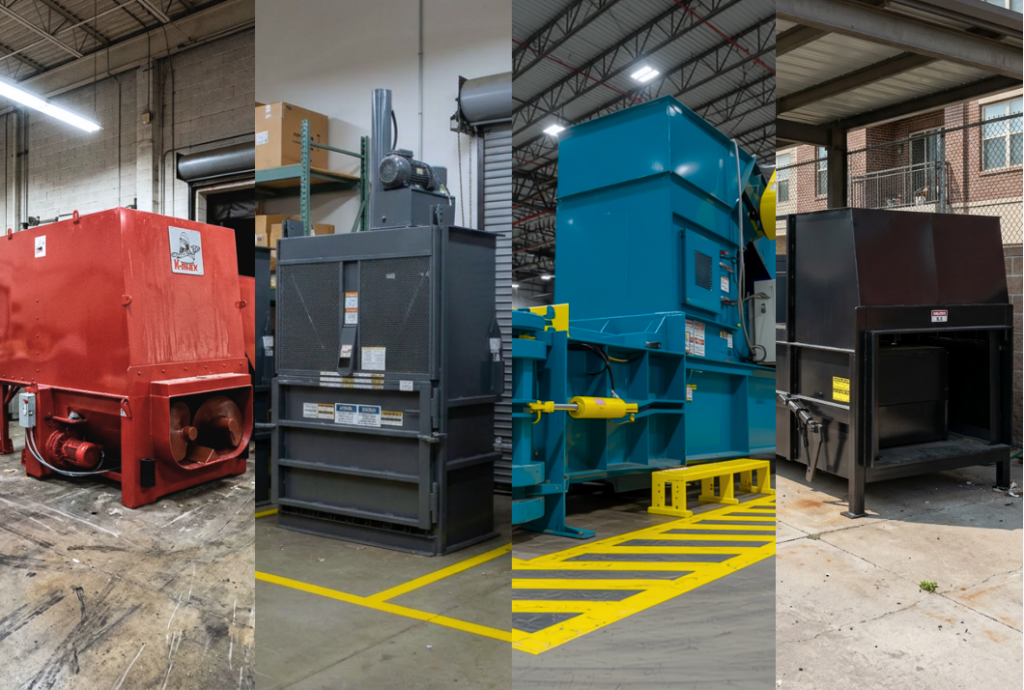
A modern municipal waste and recycling operation is built around a few core equipment types, each designed to handle specific material streams efficiently.
Horizontal Recycling Balers
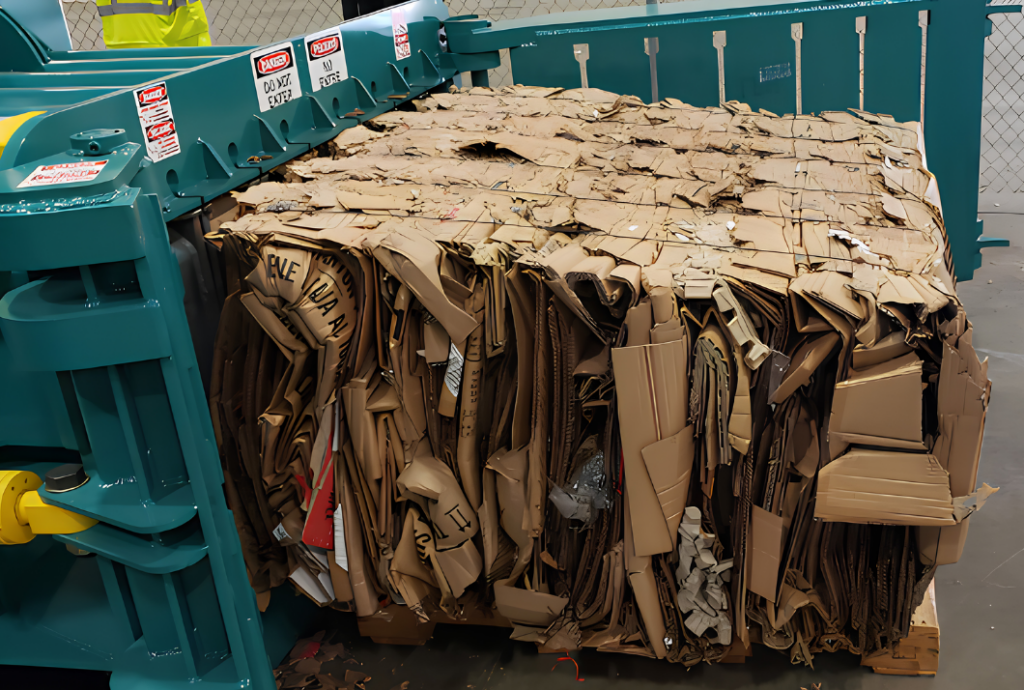
Horizontal balers are the workhorses of municipal recycling centers. They process mixed recyclables including OCC, paper, film plastics, aluminum, and more at high throughput rates, producing bales that meet recycler specifications for density and dimension.
Modern horizontal models include auto-tie systems, variable-speed drives for energy efficiency, and integration points for conveyor infeed systems. Higher-volume mixed-material stream operations often use two-ram horizontal balers that handle denser bale production continuously.
Compaction Systems for Solid Waste
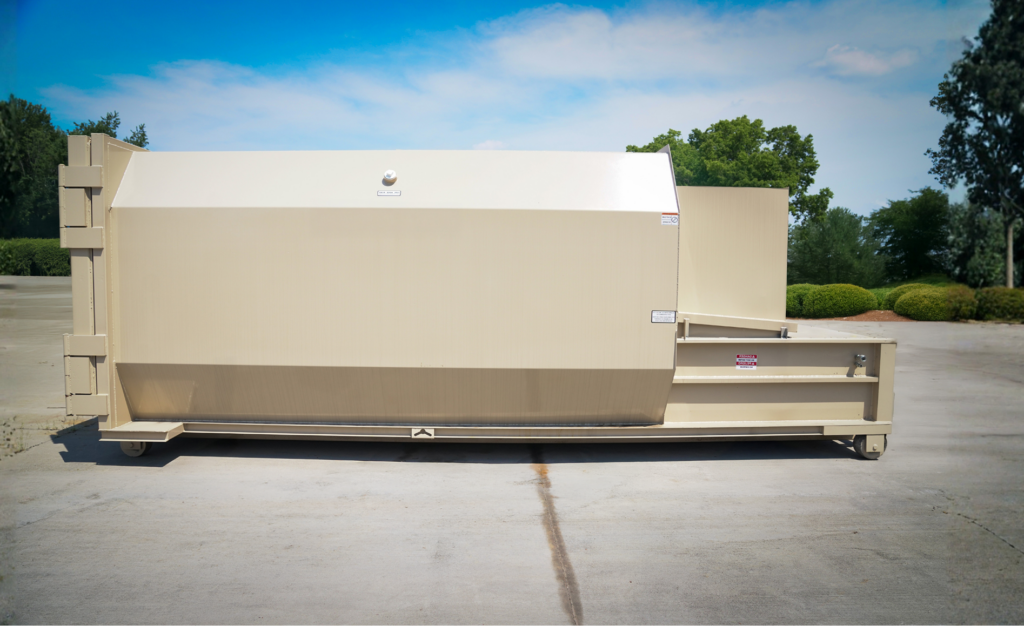
Municipal solid waste transfer and processing facilities rely on stationary and self-contained compactors to manage general waste volumes. Modern compactor designs include better hydraulic efficiency, improved control systems, and integration with monitoring platforms that track cycle counts and system pressure in real time.
IoT Monitoring and Predictive Maintenance
This is where modern municipal equipment most clearly separates from older configurations. Real-time monitoring systems track equipment performance against operational baselines and flag deviations before they become failures.
For a public works department managing multiple pieces of equipment across one or more facilities, remote monitoring changes the maintenance model. Instead of technicians doing manual inspection rounds or waiting for something to break, the monitoring system provides ongoing visibility and early warning.
Komar’s iSmart IoT platform brings this capability to balers and compactors, giving public works managers visibility into equipment status and enabling planned maintenance before failures occur.
How Cities Are Funding Equipment Upgrades
Capital constraints are the most common reason municipal equipment upgrades do not happen on an optimal timeline. But several funding approaches have made modernization more accessible.
Federal infrastructure grants under recent legislation have included provisions for waste processing equipment. State recycling program funds are available in many jurisdictions. Equipment financing and lease-to-own programs allow municipalities to pay for equipment out of operating budgets rather than capital allocation.
The total cost of ownership comparison between maintaining aging equipment and upgrading to modern configurations often makes the financial case clearly. A department spending significantly on emergency service calls for a 20-year-old recycling baler may find that a new machine with a service agreement costs less per year in total when maintenance, downtime, and labor costs are included.
Frequently Asked Questions
Horizontal balers are the standard for municipal recycling centers, handling mixed recyclables at high throughput. Two rams are primarily used for high-volume mixed material streams.
Municipalities are accessing federal infrastructure grants, state recycling program funds, and equipment financing options. Many find that total cost of ownership comparisons justify upgrade investments even when capital budgets are limited.
IoT monitoring tracks fullness and equipment health in real time and enables predictive maintenance. For public works departments, remote monitoring unlocks optimized hauling and provides visibility across multiple machines and facilities, reducing emergency service calls and unplanned downtime.
Start with current throughput data and maintenance cost baselines. Evaluate service coverage options for each equipment type. Consider the operational advantage of a single equipment partner covering your full equipment portfolio.
| Komar’s municipal equipment specialists work with public works departments to specify horizontal balers matched to their program’s throughput and material mix. If you are planning a recycling center upgrade, contact us to help build your business case. |