Standard compactors handle most waste streams well. However, some materials resist conventional compaction. Wood waste, cardboard, and bulky industrial scrap do not compress cleanly in a ram-based machine. They jam, they bridge, and they drive up maintenance costs.
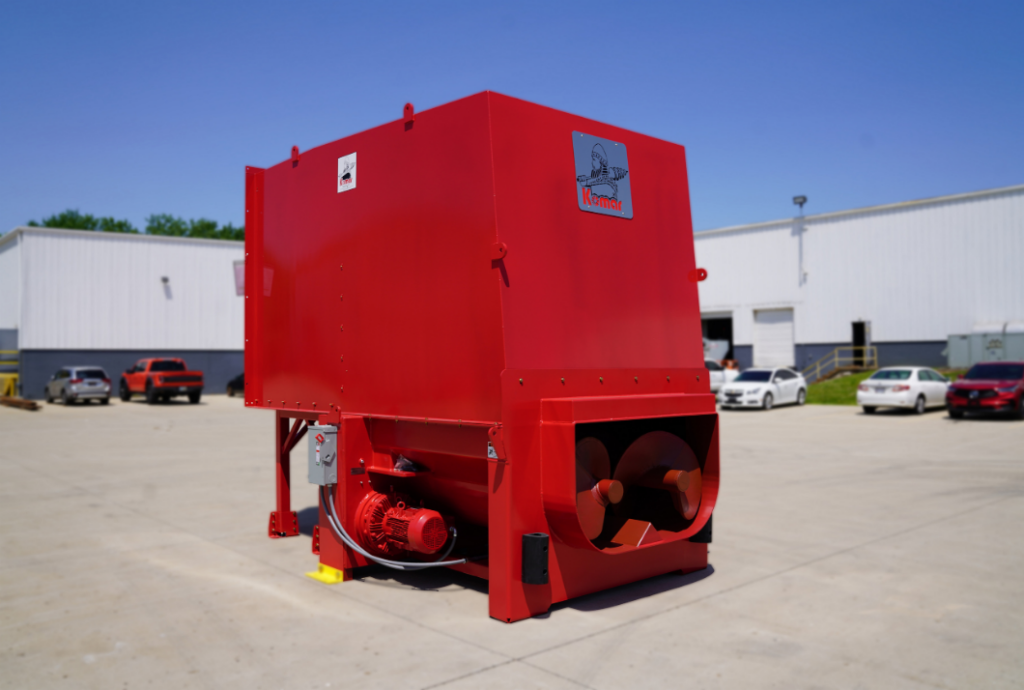
An auger compactor solves this by using a rotating screw mechanism to grab, pull in, and continuously compact bulky and resilient materials that standard equipment cannot handle reliably. For the right waste stream, it is the difference between a machine that works and one that struggles with frequent issues.
Table of Contents:
- How an Auger Compactor Works
- Materials Best Suited for Auger Compaction
- Compaction Ratios and Volume Reduction
- Auger Compactor vs. Traditional Ram Compactor
- Installation and Facility Requirements
- Single-Screw vs. Dual Screw Models
- Frequently Asked Questions
Key Takeaways
|
How an Auger Compactor Works
An auger compactor uses a rotating screw to pull material into the compaction chamber and continuously move it forward. Unlike ram-based compactors, which process material in batches as the ram cycles back and forth, an auger accepts a continuous material feed, compacting material as it enters the machine. This continuous-feed design allows an auger compactor to process higher volumes of material with less interruption, making it well suited for high-volume bulky waste applications.
The mechanism handles bulky, irregular, and stringy materials that would jam or bridge in a standard compactor. The rotating action breaks down and compresses simultaneously, making it effective for materials with high compaction resistance.
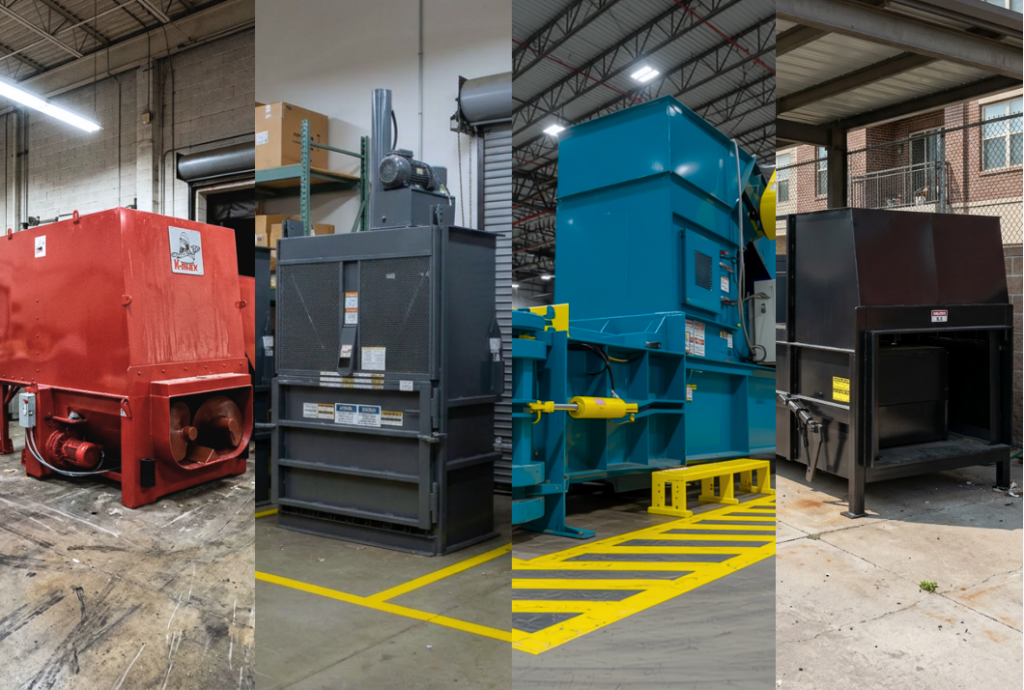
Single-screw augers use one rotating auger. Dual-compaction models use two counter-rotating augers and handle higher material volume with faster packing speeds. Dual-screw recirculator auger designs handle oversized waste by moving material back through the compaction zone for additional volume reduction when space is limited and density requirements are high.
Materials Best Suited for Auger Compaction
Auger compactors are specified for waste streams that cause problems in conventional equipment.
Wood Waste and Pallets
Broken pallets, wood packaging, and old spools are among the most common applications for auger compactors in manufacturing and distribution environments. A standard pallet here and there is fine in a traditional compactor. The problem starts when wood becomes a steady stream.
At that point most facilities land on one of three workarounds. Manual breakdown with crowbars and pry bars, a separate shredder feeding the compactor, or a third party contracted to haul the wood away. All three are costly labor-driven solutions that scale with your volume.
An auger compactor takes whole pallets and crates without pre-processing. The rotating screw fractures wood waste as it pulls material in, so what reaches the container is already compactible. Ram technology applies linear force, which large wood pieces tend to resist rather than fracture.
Bulky Items and Product Destruction
Sofas, mattresses, appliances, office furniture, and used drums are among the hardest items to move through any facility. Two things make them difficult. High-cushion items compress under pressure and then return to shape once force is removed, and rigid items are dense and may contain significant empty space.
An auger compactor handles both with a dual-action shearing and compacting motion that tears items apart as it packs them. Pre-crusher compactors take the other approach, breaking items down with a pre-crush cycle before the compaction stroke. Neither one asks your team to disassemble anything first.
Product destruction runs on the same equipment for a different reason. Returns, off-spec production, expired inventory, and R&D samples have to be rendered unusable, not just discarded. Retailers, industrial or other manufacturers, and consumer goods companies specify augers and shredders so destruction and volume reduction happen in one pass.
Compaction Ratios and Volume Reduction
Auger compactors typically achieve compaction ratios of 4:1 to 8:1 depending on the material type, moisture content, and operating conditions.
Compare this to a standard stationary compactor, which typically achieves 3:1 to 5:1 on conventional waste streams. When processing the specific materials auger compactors are designed for, the specialized mechanism produces comparable or better compaction results while handling materials and volumes that would otherwise not compact at all.
Auger Compactor vs. Traditional Ram Compactor
The right comparison is not about which machine is better in general. It is about which machine handles your specific waste stream and is right for your specific operational conditions.
A standard stationary or self-contained compactor is the right choice for general solid waste, bagged trash, and food waste. It costs less, requires less maintenance on the compaction mechanism, and handles moderately high volumes of conventional material efficiently.
An auger compactor is the right choice when your waste stream requires high throughput or includes bulky materials that jam or bridge in a ram machine. If your facility requires frequent maintenance calls on a standard compactor, the cost of that maintenance likely exceeds the premium for the right equipment.
Facilities with mixed waste streams sometimes operate both: a standard compactor for general waste and an auger unit for the bulky material fraction.
| Not sure whether a standard compactor or auger model fits your waste stream? Komar’s application specialists review facility waste profiles and recommend the right equipment. Start a conversation today. |
Installation and Facility Requirements
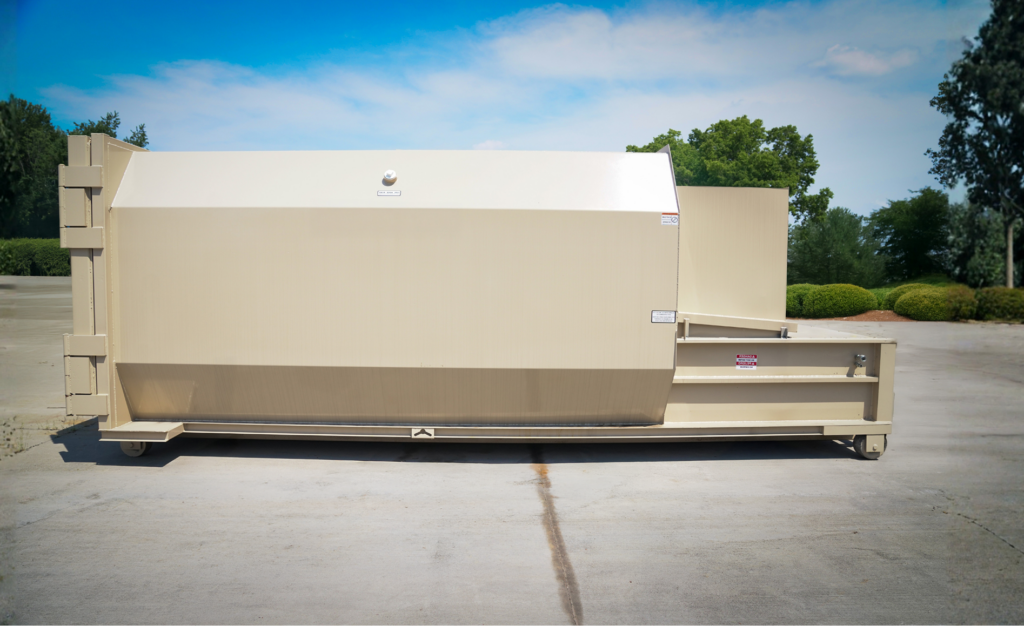
Auger compactors are typically installed outside in a dock door and connected to the building via an enclosure. They require similar site preparation to standard stationary compactors: a level concrete pad, adequate drainage, power supply sized to the motor requirements, and access for container swap-out.
Single-screw auger models are comparable in footprint to standard stationary compactors. Dual-screw models are larger and heavier. Plan for adequate clearance and forklift access for container service, hauling, service, or other needs around the equipment.
Single-Screw vs. Dual-Screw Models
The decision between single-screw and dual-screw models depends on material size, volume, and required compaction density.
Single-screw auger compactors handle most wood, foam, and bulky waste effectively. They cost less to purchase and maintain than dual-screw models.
Dual-screw models handle heavier industrial waste and applications requiring higher throughput or denser output. They are more common in manufacturing environments with continuous, high-volume waste generation.
Ask your equipment supplier about the specific materials you are processing before specifying a model. The screw geometry, flight spacing, and motor sizing vary significantly between configurations.
Frequently Asked Questions
An auger compactor uses a rotating screw mechanism to continuously pull in and compress bulky materials. It is designed for waste streams that jam or bridge in conventional ram-based compactors, including wood, foam, pallets, and large cardboard packaging.
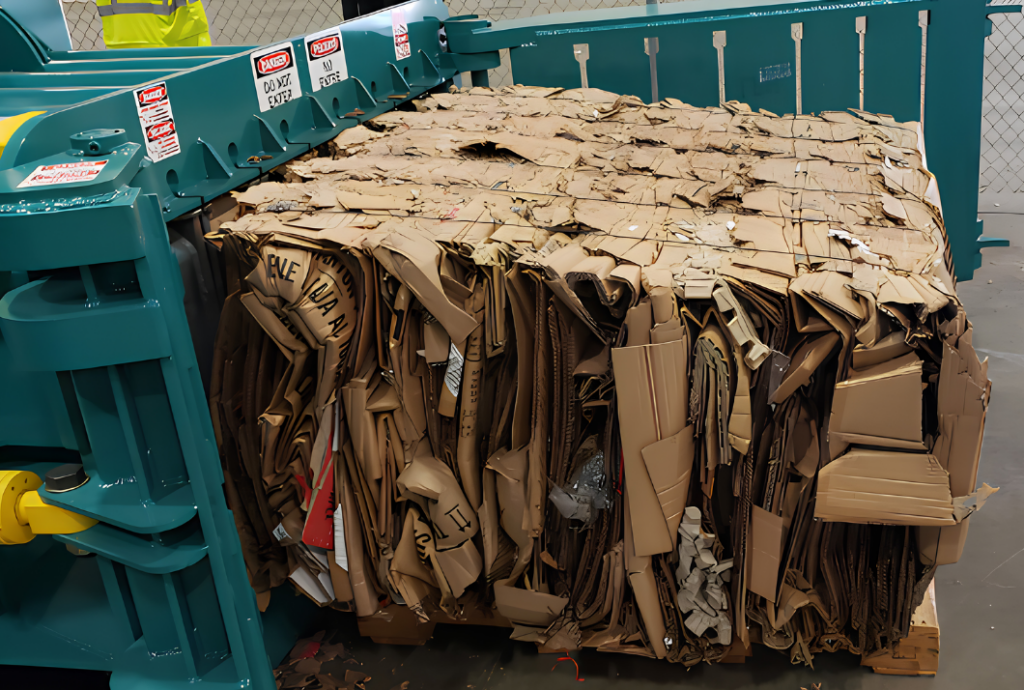
Auger compactors are commonly used for wood waste, broken pallets, cardboard, and foam , soft goods, and mixed bulky industrial waste. They handle materials that cause operational problems in standard compactors.
A standard ram compactor pushes waste in a single direction under hydraulic pressure. An auger compactor uses a rotating screw to continuously pull material into the chamber and compact it as it moves through. This handles bulky and irregular materials that jam ram mechanisms.
Typical compaction ratios range from 4:1 to 8:1 depending on material type. Actual ratios depend on material density, moisture content, operating conditions, and the specific auger configuration.
Ready to Address Your Bulky Waste Problem?
| If your facility is dealing with wood waste, foam, pallets, or textiles that your current compactor cannot handle reliably, an auger compactor may be the right solution. Komar’s equipment line includes single-screw and dual-compaction models for a range of industrial applications. Contact a Komar application specialist to review your waste stream and get an equipment recommendation. |