Not every commercial trash compactor works for every business. The right model depends on your waste type, the volume you generate, the space you have available, and what kind of service support you can rely on.
A stationary compactor that works well for a distribution center will not work for a grocery store with high-moisture food waste. A vertical compactor suitable for a small retail location cannot handle the throughput of a mid-size manufacturing plant. The difference matters operationally and financially.
Table of Contents
- Types of Commercial Trash Compactors
- Stationary Compactors
- Self-Contained Compactors
- Vertical Compactors
- Chute-Fed Compactors
- Pre-Crushers
- Auger Compactors
- Matching Compactor Type to Your Waste Stream
- Dry Waste Streams
- Wet or Mixed Waste Streams
- Space-Constrained Locations
- Space and Power Requirements
- Calculating ROI on a Commercial Compactor
- Frequently Asked Questions
Key Takeaways
|
Types of Commercial Trash Compactors
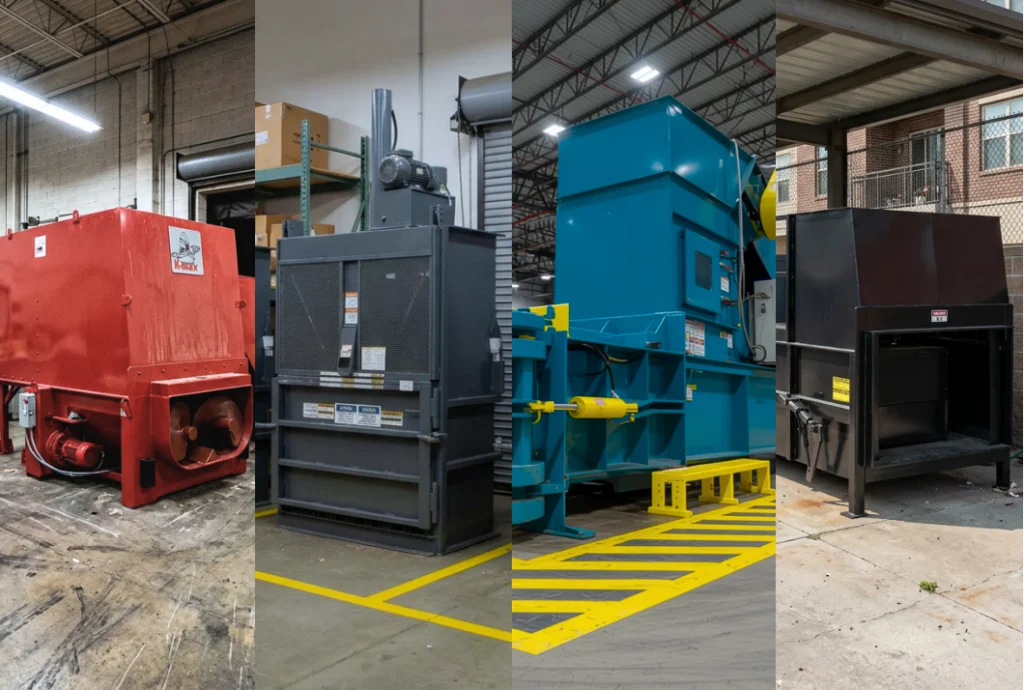
Commercial compactors fall into four main categories. Understanding what each handles well determines which one belongs in your facility.
Stationary Compactors
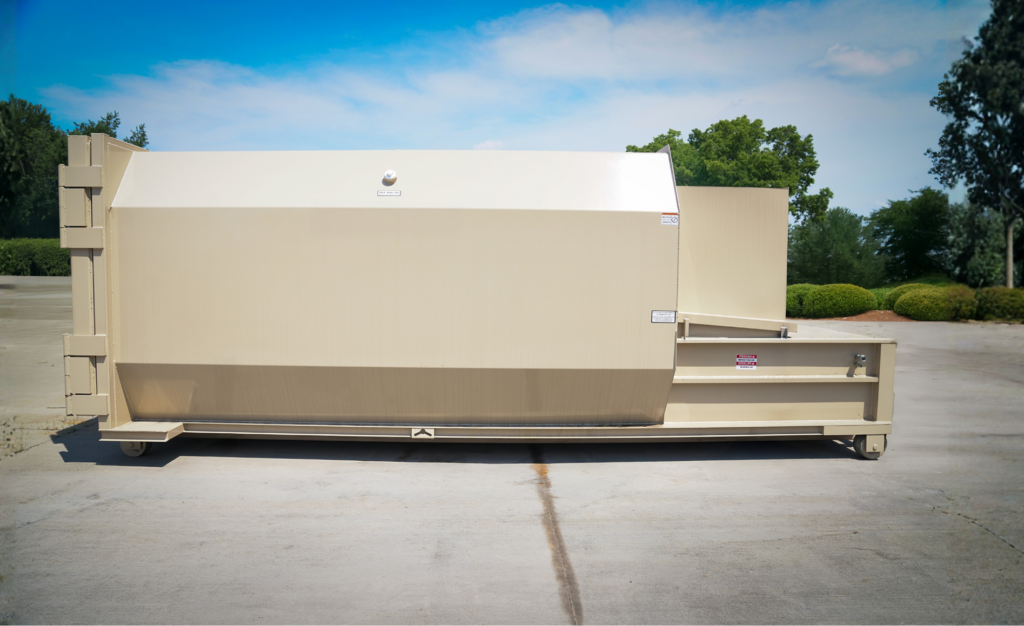
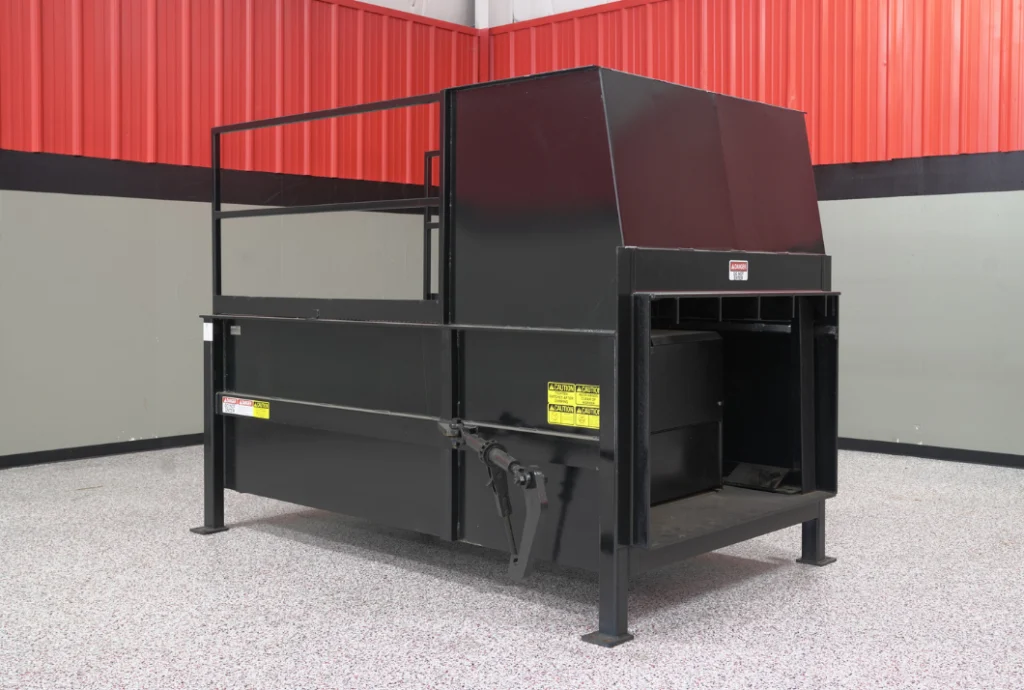
A stationary commercial trash compactor is fixed in place and connected to a detachable container. When the container fills, it is swapped out by a hauler while the compactor unit stays in place.
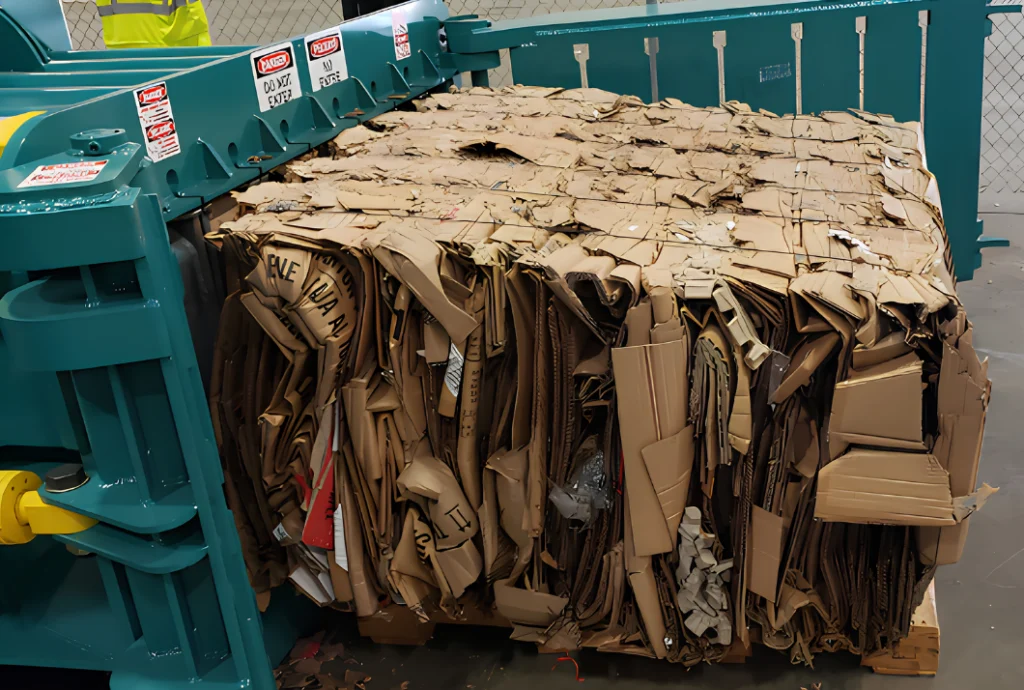
Stationary compactors are designed for dry or semi-dry waste streams, including cardboard, plastics, packaging materials, and other waste that produces minimal liquid. They are commonly used in retail, distribution, manufacturing, and other facilities where dry waste is generated in significant quantities.
Stationary compactors are often the preferred choice for dry waste streams because they maximize container utilization, helping facilities improve waste handling efficiency and reduce hauling costs.
Self-Contained Compactors
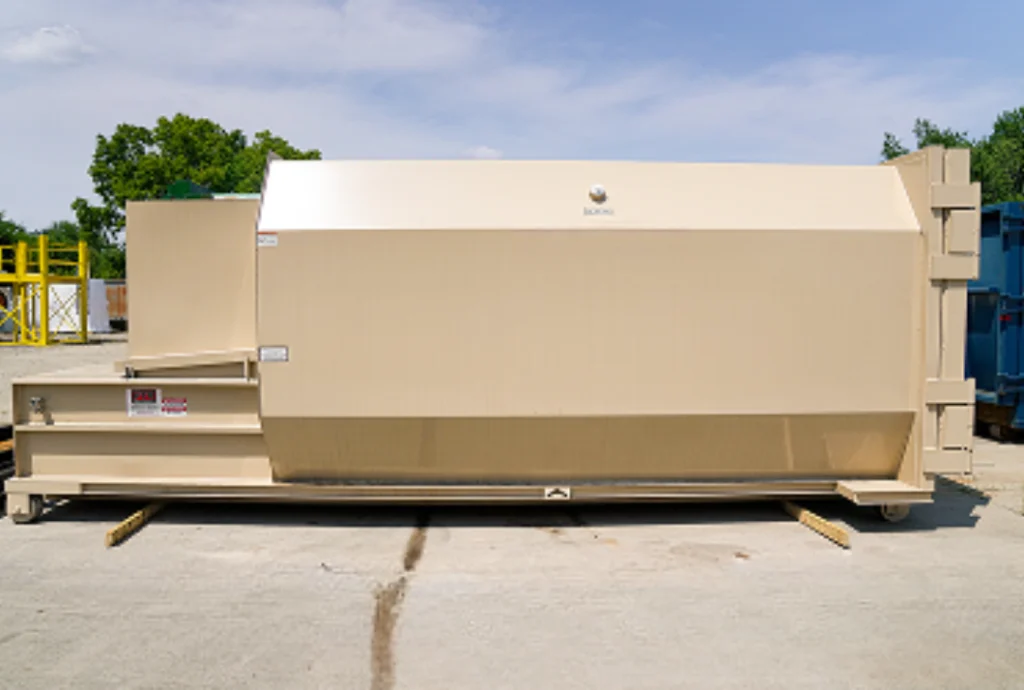
Self-contained compactors house both the compaction unit and the container in one sealed assembly. The entire unit is transported to the landfill, emptied, and returned. The sealed design prevents liquid from escaping, making these machines the right choice for wet or semi-wet waste streams.
Grocery stores, food processing facilities, restaurants, and other operations generating food waste or high-moisture materials specify self-contained compactors. The sealed container prevents leachate from contaminating the compaction area or surrounding environment.
Vertical Compactors
Vertical compactors compress waste from the top down using a vertical ram. They have a smaller footprint than stationary or self-contained models, which makes them suitable for locations with limited space.
A vertical commercial trash compactor works well for smaller retail operations, pharmacies, convenience stores, restaurants, and facilities generating moderate waste volumes. They are typically loaded manually and are often chosen when waste volumes do not warrant a larger stationary or self-contained compactor.
Chute-Fed Compactors
Chute-fed compactors are designed specifically for multifamily residential and commercial buildings with vertical trash chute systems. Waste falls through the chute and enters the compactor at the base. The compactor is matched to the chute system’s material flow rate.
These units are different from standard commercial compactors in their intake geometry, hopper design, and control system, all of which are configured for gravity-fed continuous material flow to streamline waste collection in high-occupancy facilities.
Pre-Crushers
Pre-crushers are integrated into stationary compactors to break down bulky or dense materials before the main compaction cycle. They are commonly used in industrial and manufacturing environments, as well as in operations handling rigid or oversized waste streams such as pallets, crates, drums, or large scrap components.
By reducing material size before compaction, pre-crushers help prevent bridging, improve compaction efficiency, and protect the system from damage caused by oversized or non-conforming items. They are typically specified when material size and material rigidity present ongoing challenges for standard compaction equipment.
Auger Compactors
Auger compactors use a rotating screw mechanism to process and densify material in a continuous, controlled flow. Material is fed into the system and conveyed through the auger, where it is compressed and reduced in size as it moves forward. This design is well suited for handling bulky, rigid, or abrasive waste streams, particularly in industrial and manufacturing environments.
Komar auger systems are commonly applied to wood waste such as large or oversized pallets, crates, and spools, as well as general compaction applications involving high volumes of cardboard, municipal solid waste, and bulky items like furniture. Their continuous, automated operation and electromechanical design allow for high throughput without reliance on traditional hydraulic systems, making them a durable solution for demanding environments with consistent waste generation.
| Not sure which commercial trash compactor type fits your operation? Komar’s application specialists help businesses match equipment to waste stream, space, and budget. Contact us today to start the conversation. |
Matching Compactor Type to Your Waste Stream
The most important variable in commercial trash compactor selection is what you are putting into it.
Dry Waste Streams
Distribution centers, manufacturing plants, and retail chains generating primarily dry waste — cardboard, plastics, packaging materials — are candidates for stationary compactors. Dry waste does not create leachate, so the sealed design of a self-contained unit adds cost with minimal operational benefit.
Wet or Mixed Waste Streams
Food service, grocery, and food processing operations generating wet or mixed waste need self-contained compactors. The sealed container prevents liquids from reaching the ground or contaminating the compaction area. It also prevents pest access and odor spread in ways that open stationary systems cannot.
Space-Constrained Locations
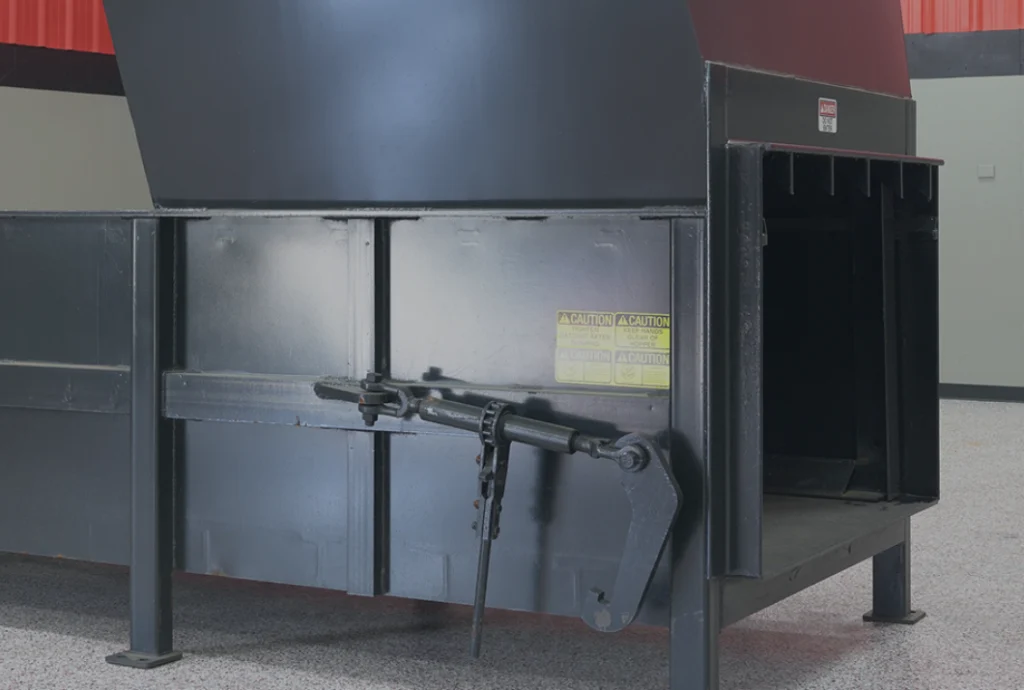
When floor space is the primary constraint, a vertical compactor is often the answer for moderate volumes. Facilities with enough volume for a larger machine but insufficient space for a larger unit sometimes use a vertical compactor as an interim solution while evaluating building modifications.
| Not sure which commercial trash compactor type fits your operation? Komar’s application specialists help businesses match equipment to waste stream, space, and budget. Contact us today to start the conversation. |
Space and Power Requirements
Every commercial trash compactor requires adequate space for the unit itself, for the container or receiver box when applicable, and for hauler access during container swap-out.
Stationary compactors need space for the compactor body and the container positioned below or adjacent to the ram. Self-contained units need access for full unit transport. Vertical compactors have the smallest footprint but still require clearance for loading and operation.
Power requirements vary by equipment size and configuration, with larger systems often requiring more robust electrical service. Consult the manufacturer to confirm site requirements before purchase or installation.
Calculating ROI on a Commercial Compactor
The financial case for a commercial trash compactor is built on two variables: reduced hauling costs and operational efficiency gains.
Compacting waste reduces its volume, which reduces hauling frequency. If you are currently paying for three hauls per week and a compactor drops that to one, the hauling cost reduction often covers the equipment cost within 18 to 36 months.
Calculate your current annual hauling costs. Estimate the compaction ratio for your waste type — typically 3:1 to 5:1 for dry waste, lower for wet waste. Project the reduction in hauls. Apply your current cost per haul to get the annual savings figure. Divide equipment cost by annual savings to estimate payback period.
Most facilities, however, leave savings on the table by hauling on a fixed schedule rather than on actual container fullness. A container pulled at 60% capacity means you are paying full haul cost for a partial load. Repeat that across a year and the overpayment compounds quickly.
Komar’s iSMART Technology™ addresses this directly. iSMART™ monitors container fill level in real time and can trigger fullness notifications and/or haul requests when the container is actually full. The result is maximum payload per haul, fewer total hauls, and hauling costs that reflect what you are actually generating rather than a calendar estimate.
When calculating ROI, model both levers: the compaction ratio improvement that reduces waste volume, and the schedule optimization that ensures every haul is a full one. Together, they produce a more accurate payback projection than compaction ratio alone.
Frequently Asked Questions
The right type depends on your waste stream and volume. Dry waste generators typically use stationary compactors. Wet or food waste operations need self-contained units. Space-constrained locations with moderate volume often use vertical models.
Estimate your daily waste generation volume and the compaction ratio for your waste type. Work backward from the haul frequency you want to achieve to determine the container size and compactor throughput capacity you need.
Stationary compactors connect to detachable containers and are designed for dry waste. Self-contained units house both the compaction mechanism and container in a sealed assembly, making them suitable for wet or food waste that produces leachate.
Compare your current annual hauling costs to your projected hauling costs after compaction reduces haul frequency. The difference is your annual savings. Divide equipment and service costs by annual savings to estimate payback period. Leverage iSMART Technology™ to optimize your hauling frequency and savings.
| Komar manufactures stationary, self-contained, vertical, and chute-fed compactors for businesses and facilities across every industry. Our application specialists help you match the right equipment to your waste stream, space, and budget. Contact us to get a recommendation for your facility. |