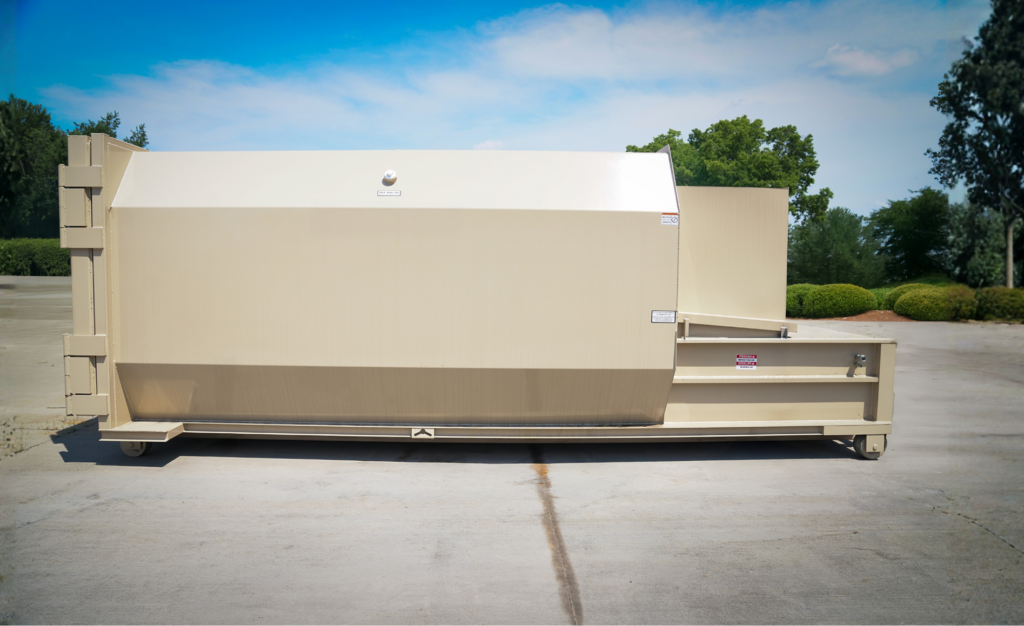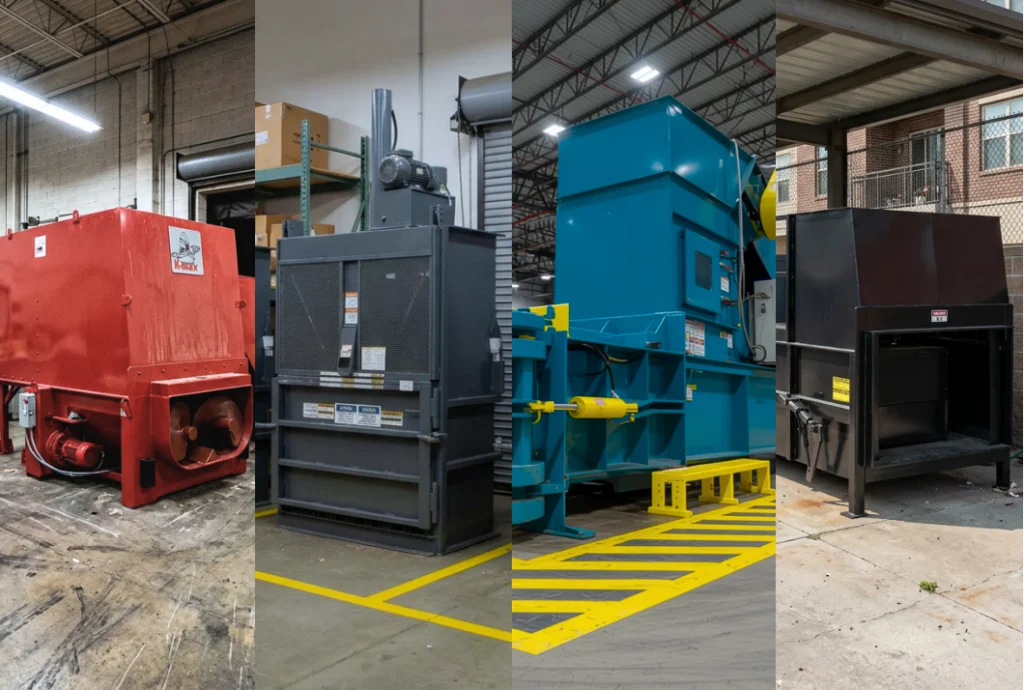
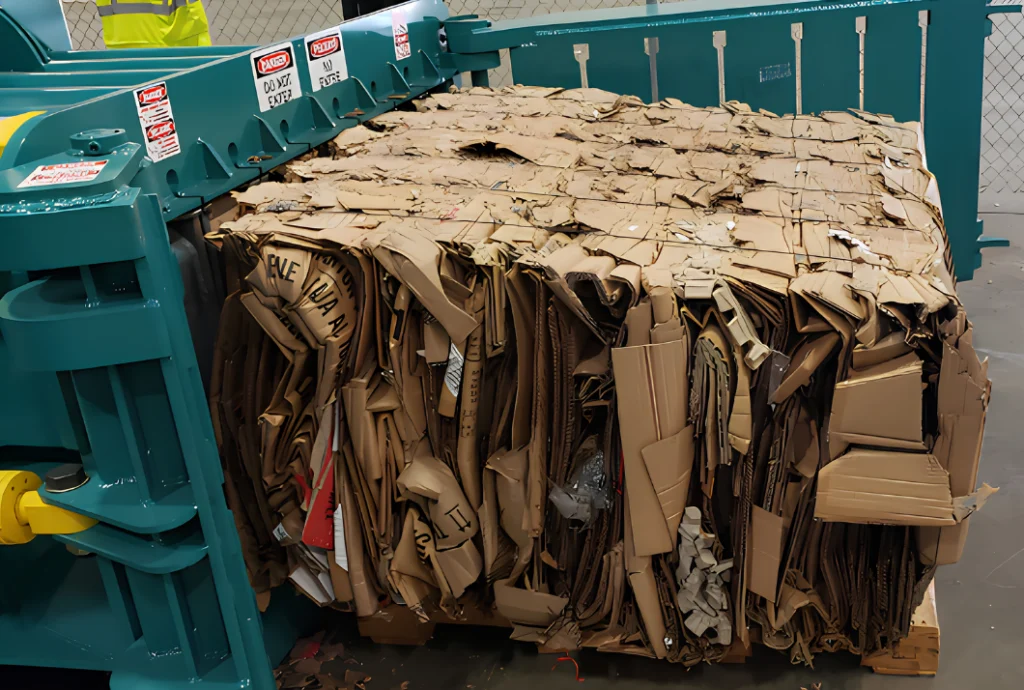
Every facility generating significant cardboard waste faces the same calculation: haul it away loose, or compress it and recover value from it. A cardboard baler changes that equation.
Facilities that bale their own OCC (old corrugated containers) generate recycling revenue instead of paying disposal costs. The math works across retail, distribution, manufacturing, and logistics, and it improves as cardboard volume increases.
But buying the wrong baler creates its own problems. A machine that is undersized for your throughput becomes a bottleneck. A model that does not fit your floor plan never gets used properly. And a baler that does not match your waste stream produces bales that haulers reject.
Table of Contents
- Key Takeaways
- How a Cardboard Baler Works
- Vertical Cardboard Balers vs. Horizontal Cardboard Balers
- Key Factors to Evaluate Before Purchasing a Cardboard Baler
- The Revenue Side of Baling Cardboard
- How does a cardboard baler work?
- What size cardboard baler does my business need?
- Is a vertical or horizontal baler better for cardboard?
- How much can I save by baling my own cardboard?
Key Takeaways
|
How a Cardboard Baler Works
A cardboard baler uses hydraulic pressure to compress loose cardboard into dense, bound bales. The operator loads material into the feed chamber, the hydraulic ram compresses it, and the machine ejects a finished bale held together by wire or strapping.
The resulting bale is dense enough to palletize, store, and sell to recyclers. Bale weights typically run 800 to 2,500 pounds depending on baler size and material density. Haulers purchase bales by the ton, so denser bales mean fewer pickups and more revenue per load.
The machine operates on a simple compression cycle: load, compress, tie, eject. The variation between baler models affects how much material each cycle handles, how fast it processes cardboard, and how much labor it requires.
Vertical Balers vs. Horizontal Balers for Cardboard
The most fundamental waste equipment decision is whether you need a vertical or horizontal baler. The answer depends almost entirely on your cardboard volume.
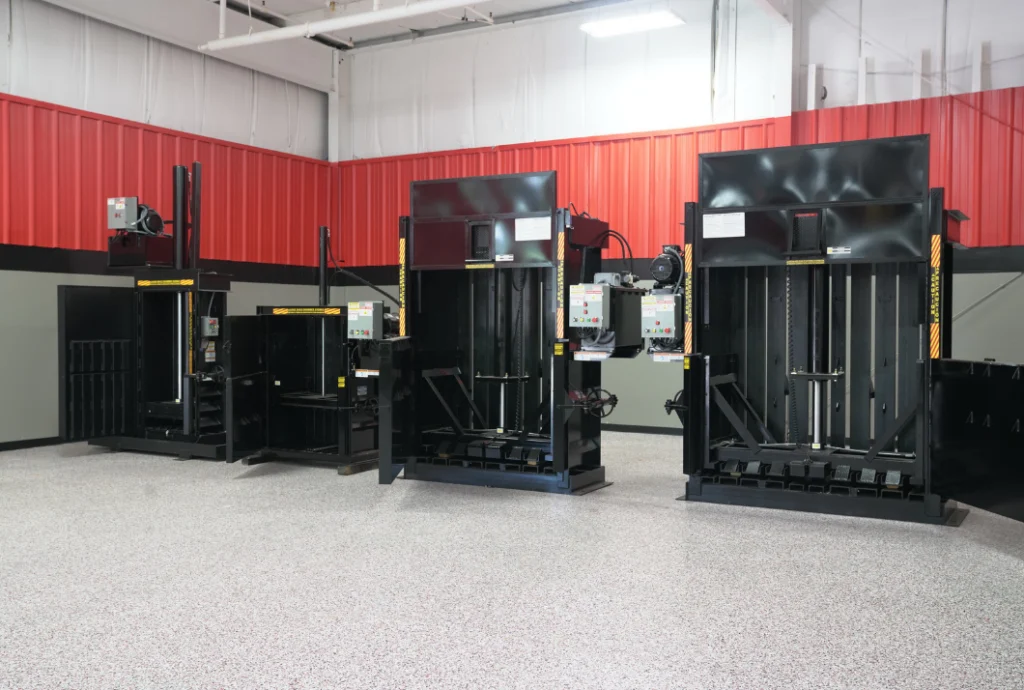
Vertical Cardboard Balers
Vertical balers compress material from the top down. The operator loads cardboard through a front door, the ram descends to compress the material, and the finished bale is removed from the front of the machine.
Vertical balers work well for facilities generating 5 to 15 tons of cardboard per month. They have a smaller footprint than horizontal models, typically require one operator, and cost less up front. The trade-off is throughput: loading and baling is mostly manual, so production volume is limited by how fast material can be fed in.
For grocery stores, retail stores, and light manufacturing operations, a vertical baler is often the right fit.
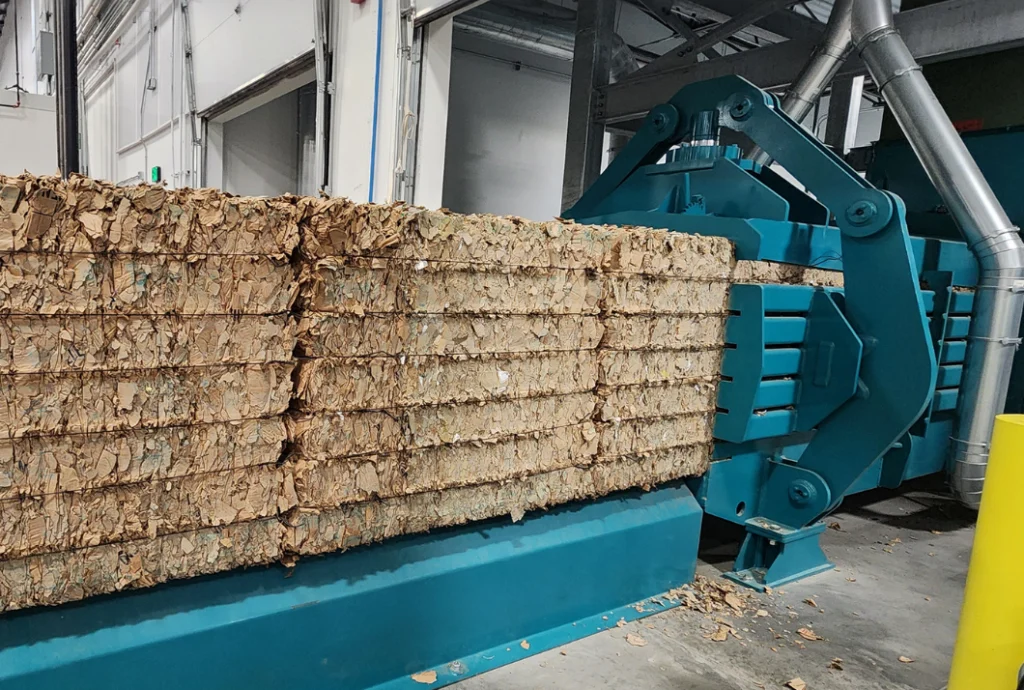
Horizontal Cardboard Balers
Horizontal balers compress material on a horizontal plane and feed cardboard continuously through a conveyor or hopper. They produce significantly more bales per hour than vertical models and can handle much higher throughput.
Distribution centers, fulfillment warehouses, and large manufacturing facilities generating 15 or more tons of cardboard per month typically need horizontal equipment. Auto-ties are ideal for automated single-stream cardboard while two-ram horizontal balers handle the highest volumes and produce the densest, most consistent bales but are better suited for mixed material streams.
Horizontal balers require more floor space and a higher initial investment but reduce labor costs compared to vertical models. Auto-tie systems eliminate the manual wire-tying step entirely, which matters when bale production volume is high.
| Not sure which cardboard baler fits your operation? Contact a Komar equipment specialist to evaluate volume, space, and budget and select the right model. |
Key Factors to Evaluate Before Purchasing a Cardboard Baler
Four variables determine which cardboard baler is right for your facility: monthly cardboard volume, available floor space, recycler requirements, and service access. Each one can disqualify a machine that otherwise seems like a fit, and a miss on any of them usually costs you every day the baler runs, not just at purchase. Evaluate all four against your actual operation before specifying equipment so the decision reflects your conditions rather than a spec sheet.
Monthly Cardboard Volume
Measure your actual cardboard generation before specifying equipment. Facilities underestimate their volume when thinking in general terms but get accurate numbers when they pull disposal invoices or weigh shipments.
A vertical baler producing 8 to 10 bales per day will not keep pace with a distribution center processing thousands of corrugated boxes daily. Match machine throughput to actual waste generation, not to a rough estimate.
Available Floor Space
Vertical balers need roughly 6 to 10 feet of floor space. Horizontal models require considerably more, often 25 to 60 feet or longer when you account for the infeed conveyor and bale ejection area.
Ceiling height matters too. Vertical balers typically need 10 to 15 feet of clearance so low-profile units are required when ceiling height is restrictive. Measure the space before specifying equipment, and account for traffic flow, emergency access, and proximity to the loading dock.
Bale Weight and Recycler Requirements
Not all recyclers accept bales of any weight or dimension. Before purchasing, confirm bale size and wire specifications with your recycler. Some programs require specific bale dimensions for palletizing; others pay a premium for denser bales.
A baler that produces bales your recycler cannot accept creates a problem that is more expensive than a slightly higher equipment cost.
Maintenance Access and Service
Cardboard balers are hydraulic systems. They require periodic maintenance on seals, cylinders, wire-tying mechanisms, and control systems. A machine with no local service support creates extended downtime when something fails.
When you evaluate equipment, ask about service response times, parts availability, and whether technicians are factory-trained or third-party contractors. For most facilities, a baler sitting idle for a week costs more than the difference between budget and premium equipment.
The Revenue Side of Baling Cardboard
Baling cardboard creates two financial benefits: reduced disposal costs and commodity revenue from bale rebates.
Baled OCC delivered to a recycler generates a payment. Some recyclers accept loose OCC but it’s likely not as strong of a rebate as baled OCC. The spread between those two numbers could be the financial justification for a baler.
The calculation depends on your cardboard volume, local commodity pricing, and current disposal costs. Facilities generating five or more tons of cardboard per month typically see payback periods of one to three years. Higher-volume operations often see payback within 12 months.
Talk to your recycler about current OCC pricing before building your business case. Commodity prices shift, so model your ROI at both current and conservative pricing scenarios.
| Not sure which cardboard baler fits your operation? Contact a Komar equipment specialist to evaluate volume, space, and budget and select the right model. |
Frequently Asked Questions
A cardboard baler uses hydraulic pressure to compress loose cardboard into dense, bound bales. Material is loaded into the machine, a ram compresses it, and the finished bale is tied with wire or strapping and ejected.
The right size depends on your monthly cardboard volume. Vertical balers suit facilities generating 5 to 15 tons per month. Horizontal models handle higher volumes and are common in distribution and fulfillment operations.
It depends on volume. Vertical balers work well for lower-volume operations with limited floor space. Horizontal balers handle higher throughput and reduce labor requirements for large-volume facilities.
Savings depend on your volume, local commodity prices, and current disposal costs. Facilities generating five or more tons per month typically see payback periods of one to three years. Higher-volume operations often recoup costs faster.
| Ready to evaluate your cardboard baling options? Reach out to a Komar equipment specialist to discuss capacity, space, and cost-of-ownership projections for your facility. |