Materials
Soft Waste, Hard Problem
Textile waste twists, tangles, and traps, overwhelming standard equipment. Komar systems are engineered to process flexible, saturated, and high-volume textile materials without breaking stride.
From fabric scraps to used PPE, textile waste resists compaction and clogs conventional systems. Komar’s torque-driven and textile solutions cut through the mess safely, efficiently, and reliably.
Textiles behave differently than other materials. They twist, wrap, stretch, and bind under load, which can jam standard equipment. Power through challenging materials with the right equipment built for operations that routinely process fabrics in their material streams.
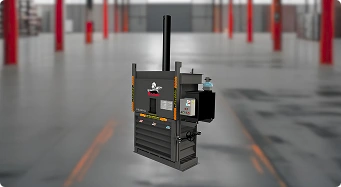
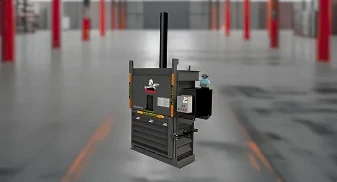
Sorted textiles like clothing or fabric scraps have downstream value that loose material can’t capture. Vertical balers turn post-consumer streams into usable bundles without requiring excessive floor space.
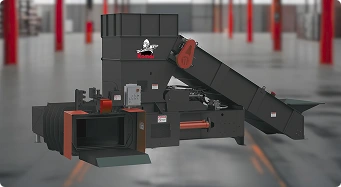
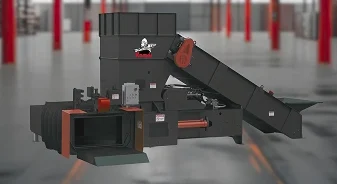
Handling high-volume textile flows requires equipment that can keep pace without creating bottlenecks. Horizontal balers automate the process, supporting facilities where speed matters.
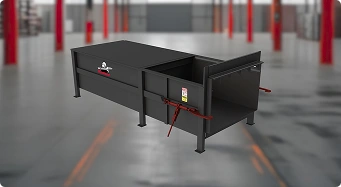
When textiles are destined for disposal rather than recycling, stationary compactors provide the most efficient solution. These systems compress whole garments and fabric waste into dense containers, minimizing haul frequency and reducing landfill costs without the need for shredding. Ideal for operations focused on secure, cost-effective disposal.
Clothing, rags, linens, uniforms, and other fabrics from hospitality, healthcare, and post-consumer recycling programs.
Disposable PPE, filters, wipes, medical textiles, automotive insulation, and production trim.
Includes off-cuts from garment and upholstery manufacturing, reinforced fabrics, rubberized or resin-coated textiles, and high-durability gear.
Typically found in food service, healthcare,
or maintenance environments—may contain
oils, chemicals, or organic matter.
Flame-retardant clothing, gloves, and hazmat suits. Specialized handling
and separation for disposal or
recycling is often necessary.
Textiles from garment manufacturers, retail stores, and donation centers often have ample life—and value
—that post-consumer markets want. The key element in delivering clean materials to supply chains starts with equipment that supports recycling.
Mixed or contaminated textiles from healthcare, food service, and industrial settings can’t be repurposed. Instead of working to recover clean material, the focus shifts to cost-effective containment and disposal.
Key Consideration: Clean textiles that can be sorted and segregated open recycling pathways that may generate revenue or offset costs. Contaminated materials need systems designed for compaction and containment priorities—hygiene and health, compliance, and volume reduction.
Fabric behaves differently than other waste streams. Komar balers and compactors are engineered for operations that need equipment that can do more and last longer than off-the-rack solutions can.
With a full line-up of equipment and options, we can work with you to develop the right solution for your operations.
Textile waste is bulky, expensive to haul, and frequently labor-intensive to manage. Komar systems solve these challenges with engineered efficiency.
Textiles are compressible, but their strong spring-back can limit load density. Our vertical balers offer optional gravity dogs to control rebound, increase compaction, and improve bale weight. Horizontal balers maintain continuous pressure and do not require gravity dogs.
Unmanaged fabric waste attracts moisture, harbors bacteria, and creates obstacles in walkways. Proper containment addresses all three issues simultaneously so work areas remain safer and cleaner.
Textiles can cause jams and wear in standard balers. Our vertical baler models use optional gravity dogs to control rebound, while horizontal balers maintain continuous pressure for smooth operation—reducing stress, downtime, and maintenance costs.
Fully sealed, industrial-grade construction prevents leaks and contains odors that often accompany fabrics tainted by chemicals, liquids, and environmental residue.
Fixed-installation systems compress loose textile wastes into an attached container to reduce hauling frequency and disposal costs.
Top-loading, space-efficient configurations turn loose fabrics into tight, manageable bundles without consuming excess real estate.
“We estimate that the Komar Auger has saved us 1,300 hours of labor per year, has reduced our hauling cost by two-thirds, and has given La-Z-Boy a safer process and more floor space.”
Troy Kvingedal, Facilities Supervisor, La-Z-Boy
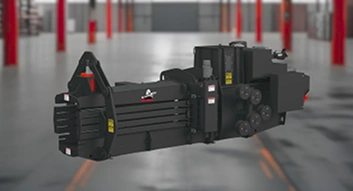
Textiles tend to twist, wrap, and stretch under pressure. Balers with gravity dogs help maintain compaction and maximize bale weight. Screw-drive auger systems continually shear and pull material inward, making them ideal for fabric.
Absolutely. We have systems that limit direct contact, reduce contamination risk, and safely handle disposable masks, gowns, and non-woven medical fabrics.
Often, yes. Castoffs, remnants, selvage, and cuttings have some value for downstream markets. As long as they’re clean and properly baled, there’s usually a buyer.
Horizontal and Vertical Balers are capable of handling all types of textiles.
Our Horizontal balers are ideal for high-volume operations that require consistent, dependable performance.
Komar has a nationwide network of master service technicians who will come to you to handle everything from scheduled service to major repairs.
Yes. We offer a full catalogue of factory-spec components for all of the different styles and models of material-handling equipment we offer.
Our systems are designed to be user-friendly from day one. While it’s not a requirement, training is recommended for reliable, safe operation.
We are a waste solutions company. With a wide array of application-specific models and advanced engineering capabilities, we look forward to guiding you to the best solution for the job.
Schedule a free waste stream evaluation to identify the right equipment and processes for your space, waste types, and volume.