Recommended Product Lines

Finding the right cardboard processing solution starts with understanding your facility’s space, volume, and material handling needs. Komar’s integrated portfolio delivers proven systems that reduce hauling costs, improve workflow, and support recycling goals.

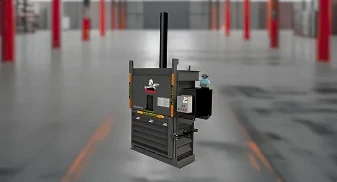
Vertical Balers

Ideal for facilities with limited space that generate moderate volumes of cardboard. Vertical balers compress material into dense bales for easy storage and transport, reducing haul frequency and improving recycling efficiency.

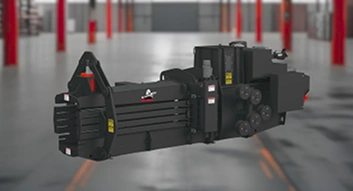
Horizontal Balers

Engineered for high-volume cardboard streams in manufacturing and distribution environments. Horizontal balers deliver continuous operation and produce mill-ready bales for maximum rebate value.

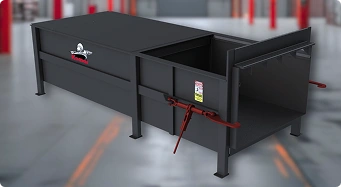
Stationary Compactors

Stationary Compactors

Reduce the volume of loose cardboard and mixed dry waste for efficient disposal or improved recycling workflows. A practical option when baling isn’t feasible, these compactors lower haul frequency and streamline material handling.

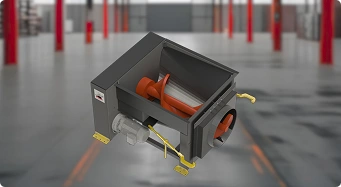
Auger Compactors

Ideal for continuous, high-volume cardboard waste. Auger systems pre-shred and compact material with minimal labor, making them perfect for distribution centers and packaging-heavy operations.

COMMOn Waste Types

Large, Rigid Gaylord Boxes

Large, Rigid Gaylord Boxes

  • Oversized, heavy-duty corrugated used for bulk packaging
  • Requires pre-shredding or high-capacity equipment for efficient processing

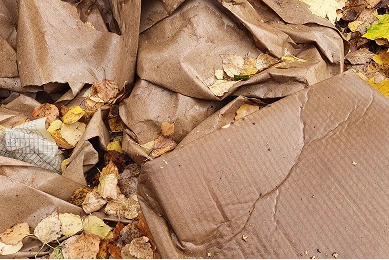
Wet or Contaminated Cardboard

  • Common in grocery and food service waste streams
  • Heavy and unsuitable for recycling; must be segregated to avoid contaminating clean OCC
Cardboard Tubes & Cores

Cardboard Tubes & Cores

  • Dense, tightly wound fibers from textiles or industrial rolls
  • Difficult to bale without shredding or specialized handling
Standard Corrugated Boxes

Standard Corrugated Boxes

  • The most common OCC from retail and distribution
  • Easily baled for recycling when clean and dry
Wax-Coated or Laminated Cardboard

Wax-Coated or Laminated Cardboard

  • Provides water resistance for packaging produce and specialty goods
  • Requires separate handling due to recycling limitations

Cardboard Slabs & Pallet Sheets

  • Layer pads used in shipping and palletizing
  • Bulky and often paired with auger compactors for efficient compaction
Die-Cut Scrap & Sheets

Die-Cut Scrap & Sheets

  • Generated by packaging converters and manufacturers
  • Ideal for horizontal balers

Recycling vs Disposal

Recyclers

Operations focused on recycling cardboard typically generate clean, dry OCC in moderate to high volumes—such as warehouses, distribution centers, grocery stores, big-box retailers, manufacturers, and more. The goal is to sell it loose or produce dense, consistent bales for resale to mills or recyclers.

Most effective equipment for recyclers:


  • Horizontal balers – for high-volume OCC and automated throughput
  • Vertical balers – for space-conscious operations with steady cardboard generation
  • Stationary Compactors – When cardboard is compacted before secondary processing.
  • Auger Compactors – Pre-shreds and compacts OCC for efficient handling; material can be sold loose or baled later for maximum value.

Recyclers often benefit from rebate revenue, improved ESG metrics, and reduced landfill dependency—provided cardboard remains free of moisture and contaminants.

Disposers

Some facilities—such as restaurants, convenience stores, small retail operations, and similar businesses—may generate low-volume or mixed cardboard waste that’s often wet, contaminated, or unsorted. In these cases, compaction for disposal may be the most practical route.

Most effective equipment for disposers:


  • Stationary compactors – for dry cardboard and mixed waste streams
  • Auger Compactors– pre-shreds and compacts bulky OCC for efficient disposal with minimal labor

For these customers, the focus is on reducing container pickups, controlling costs, and keeping labor low rather than maximizing recycling revenue.

Key Consideration: Clean, high-volume cardboard can be a revenue stream. Mixed or low-volume cardboard is best handled through compaction to reduce operational costs. Many industries recycle when conditions allow, but space, contamination, and labor constraints often make disposal the more practical choice.

Your Partner for Smarter OCC Management

We offer a full suite of cardboard processing solutions tailored to your operational needs—whether you’re working with limited space, handling high OCC volumes, or managing a tight budget. From vertical and horizontal balers to stationary and auger compactors, our equipment is designed to reduce hauling costs, improve workflow, and support your recycling goals. With decades of engineering expertise and integrated material handling options, Komar can deliver the right solution for your facility and maximize long-term efficiency.

Your Partner for Smarter OCC Management

Don’t see your specific cardboard waste application here?

Contact us today to schedule a free materials evaluation—our team will assess your waste stream and recommend the right equipment solution tailored to your operation.

Why Cardboard Compaction Delivers Measurable Value

Reduced Hauling Costs

Compacting or baling cardboard dramatically reduces volume, allowing more material per container and fewer pickups. This lowers transportation fees and landfill tipping charges for immediate cost savings—and when baled, OCC can also be prepared for resale.

Labor & Operational Efficiency

Loose cardboard takes time and space. Compaction eliminates manual box flattening and pre-processing, prevents overflow issues, and streamlines handling—freeing staff for higher-value tasks.

Generate Revenue from Recyclables

Clean, baled or often times, loose cardboard can be sold to recyclers, turning waste into a revenue stream. For high-volume operations, these rebates help offset equipment costs and improve profitability.

MACHINEs & MODELs

Vertical Baler – v60oc

A space-efficient solution that turns loose cardboard into compact, stackable bales; ideal for low- to moderate-volume applications.

Horizontal Baler – 2R265

Designed for high-throughput environments, this machine automates the baling of large volumes of cardboard for continuous, efficient processing.

Stationary Compactors

Stationary Compactor - C2

Fixed-position systems with the power needed to efficiently compress loose cardboard into a connected container, reducing hauling frequency and optimizing waste volume.

Auger Compactor - AS-40G-HS

Powerful screw-drive systems pre-crush and compact high volumes of cardboard continuously, making augers ideal for industrial or distribution settings.

FAQs

Proper cardboard processing reduces volume, lowers disposal costs, keeps workspaces organized, and increases recycling potential or disposal efficiency.

Cardboard can be processed using vertical balers, horizontal balers, stationary compactors, and auger compactors—our recommended solutions for OCC. Other equipment types exist, but these four deliver the most efficient results for recycling and disposal.

Vertical balers are ideal for small to midsize operations, such as retail stores or offices.

For high-throughput environments like warehouses or distribution centers, a horizontal baler or auger compactor provides efficient, continuous processing and minimizes labor. In some cases or in focused areas, multiple vertical balers can also handle high volumes when space or budget constraints apply.

Yes. Stationary and auger compactors are commonly used to compress loose cardboard, especially when recycling isn’t practical or material needs to be minimized before hauling.

Most cardboard is recyclable, but wet, wax-coated, laminated, or food-contaminated material may be rejected by recyclers. Clean, dry corrugated cardboard is ideal.

Balers and compactors can reduce cardboard volume by up to 80–90%, depending on the equipment and material type.

Yes. Clean, baled cardboard can be sold to recyclers for rebates, creating a revenue stream that helps offset equipment costs and supports sustainability goals. Even loose cardboard from compactors can generate revenue when sent to secondary processors, though rebates are typically lower than for bales.

Absolutely. Low-profile balers and short-profile compactors are available for facilities with limited space or restricted ceiling heights.

If your needs go beyond a standard Komar baler or compactor, we’ll work with you to find the right solution or design a custom-engineered system tailored to your goals and challenges.