Self-Contained Compactors

Why Waste Segregation Matters

Mixing wet and dry waste makes recycling much harder and can increase landfill burden. By simply sorting waste at the source, businesses reduce their environmental impact and support more sustainable waste management systems.

Wet Waste VS Dry Waste

Proper waste segregation is critical for equipment selection, efficient compaction, odor control, and recycling. Here’s the difference:

What Is Wet Waste?

Wet waste, often called organic waste, is biodegradable and typically originates from kitchens, gardens, schools, businesses, and healthcare facilities.

Types of wet waste:

  • Food scraps (vegetable peels, eggshells, leftover food)
  • Tea bags and coffee grounds
  • Garden trimmings and wilted flowers

Wet waste decomposes quickly, and if not properly separated, can contaminate recyclable materials and increase disposal costs.

What Is Dry Waste?

Dry waste, often referred to as inorganic waste, includes non-biodegradable materials that decompose slowly. Common in manufacturing, processing, and distribution environments, dry waste is typically recyclable if kept clean and separate.

Examples include:

  • Paper and cardboard
  • Plastics, metals, and glass
  • Fabrics, rubber, and packaging materials

Most dry waste can be recycled or repurposed, but it is critical that it is kept clean and separate from wet waste.

Self-Contained vs Stationary

Self-Contained Compactors

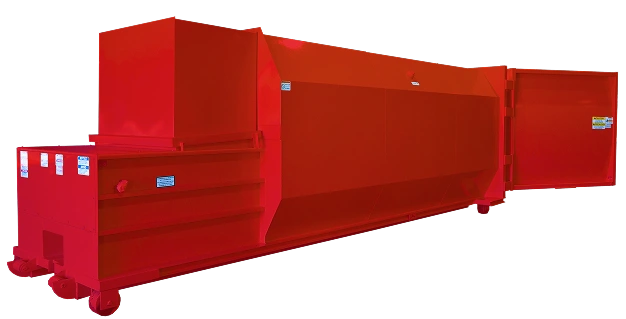
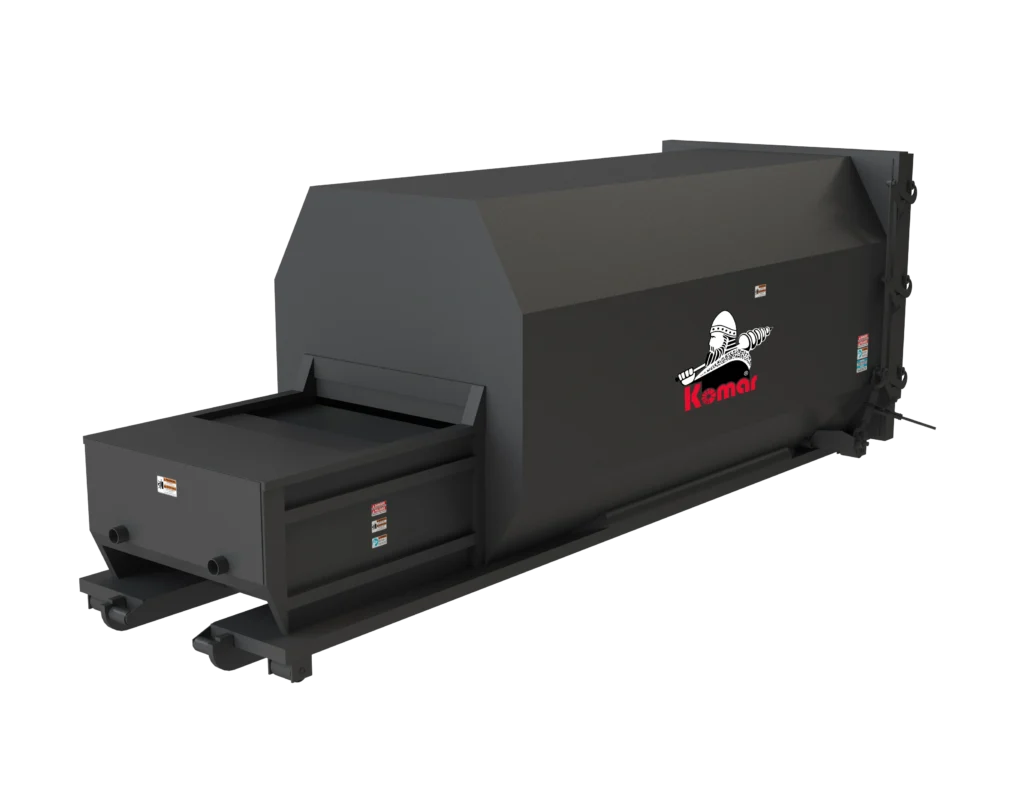
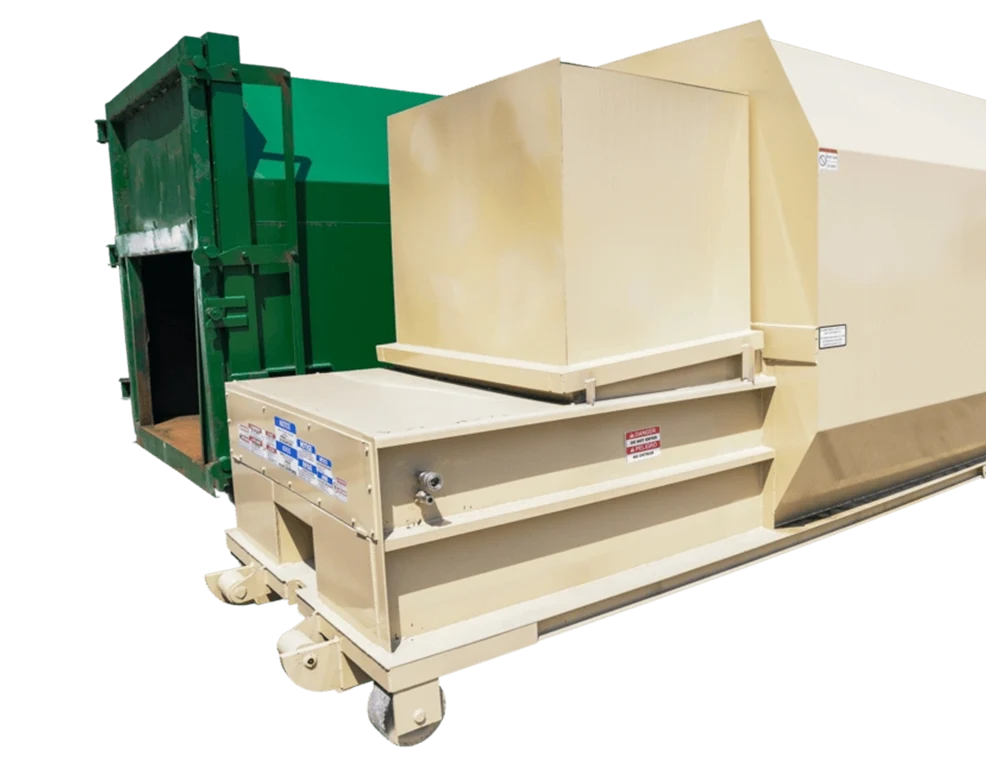
Self-contained compactors are designed to contain both waste and liquid with an integrated compactor and container as a single, sealed unit.

  • Ideal for wet waste (e.g., food, organic material)
  • Compactor and container are a single sealed unit
  • Helps prevent leaks and odor issues
  • Commonly used in restaurants, grocery stores, and hospitals
  • Typically smaller and mobile via roll-off truck

Stationary Compactors

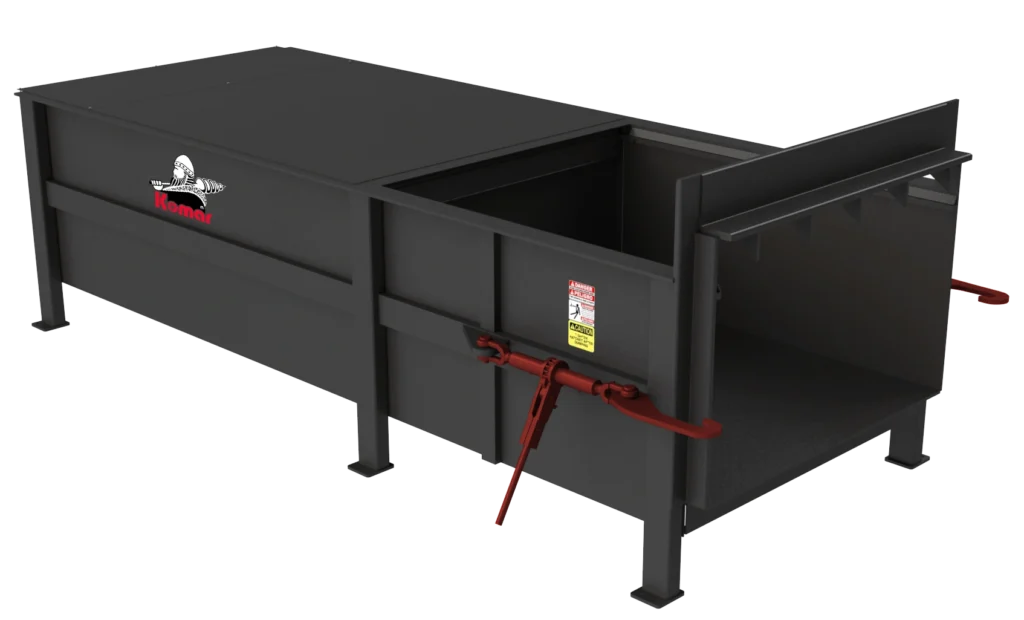
Stationary compactors remain fixed and are used with detachable containers for high-volume dry waste only.

  • Best for dry waste (e.g., cardboard, plastic)
  • Compactor stays in place; detachable receiver box collects compacted waste
  • Larger capacity for high-volume facilities
  • Common in warehouses, distribution centers, and retail stores
  • Requires less frequent servicing for high-volume dry material

Why This
Machine

Designed for efficient waste management in commercial and industrial settings where sanitation and liquid retention are critical.

Engineered for wet waste applications, Komar self-contained compactors integrate seamlessly with waste handling systems, delivering reliable performance and reducing collection frequency. With container size options from 10 to 35 cubic yards, these units adapt to growing waste volumes without compromising efficiency or footprint. Their user-friendly design, heavy-duty construction, and leak-resistant build make them a dependable solution for managing wet and mixed waste streams while helping facilities maintain sanitation standards.

Self-Contained Compactors

Key Features

Welded Frame Is Leakproof

Tri-Hinge Concave Trashmaster Door

Sure-Tite Full
Door Seal

100% U.L. Approved, Meets ANSI Safety Standards, ETL & CETL Approved

Clean-Flush Sump System w/ Waste Flow Design

Maximize efficiency by balancing compactor footprint with waste volume and space constraints

Komar SC10HD

Komar SC10HD

Overall Length
12.5 ft
Container Length
5 ft
Capacity
10 cu. yd. / 8 cu. m.

Komar SC20HD

Overall Length
15 ft.
Container Length
8 ft
Capacity
15 cu. yd / 12 cu. m.
Komar SC20HD

Komar SC20HD

Overall Length
17.5 ft
Container Length
10 ft
Capacity
20 cu. yd. / 15 cu. m.

Komar SC25HD

Overall Length
19.5 ft
Container Length
12 ft
Capacity
25 cu. yd. / 19 cu. m. 
Komar SC30HD

Komar SC30HD

Overall Length
22 ft
Container Length
14.5 ft
Capacity
30 cu. yd. / 23 cu. m.

Komar SC35HD

Overall Length
25 ft
Container Length
17.5 ft
Capacity
35 cu. yd.  / 27 cu. m.

Model Specifications

Komar Self-Contained Compactor Specs SC10HD SC15HD SC20HD SC25HD SC30HD SC35HD
Capacity (cu. yd. / cu. m.) 20 cu. yd. / 15 cu. m. 20 cu. yd. / 15 cu. m. 20 cu. yd. / 15 cu. m. 25 cu. yd. / 19 cu. m. 30 cu. yd. / 23 cu. m. 35 cu. yd. / 27 cu. m.
Approx. Compactor Shipping Weight (lb) 8,250 (3,742kg) 8,250 (3,742kg) 8,250 (3,742kg) 9,060 (4,110kg) 10,000 (4,536kg) 10,500 (4,763kg)
Overall Length (in. / cm.) 211″ / 536 cm. 211″ / 536 cm. 211″ / 536 cm. 235″ / 597 cm. 264″ / 671 cm. 296.5″ / 753 cm.
Container Length (in. / cm.) 122.5″ / 311 cm. 122.5″ / 311 cm. 122.5″ / 311 cm. 146.5″ / 372 cm. 175.5″ / 446 cm. 208″ / 528 cm.

Universal Model Specifications

Container Height (in. / cm.) 101.5″ / 258 cm
Container Width (in. / cm.) 96″ / 244 cm
Overall Width 97.75″ / 248 cm
Charge Box Capacity 2.0 cu. yd / 1.5 cu. m
Ram Penetration (in. / cm) 6″ (15 cm)
Cylinder Bore / Stroke / Rod (2) 4″ × 32″, 2.5″
Motor Horsepower (HP) 10
Pump GPM 10.5
Avg. Cycle Time (sec) 31 seconds
Clear Top Opening (in.) 41×60 (104 cm x 152 cm)
Hydraulic Pressure PSI (Normal / Max) 2,000 / 2,300
Force Rating (lb.) (Normal / Max) 42,708 / 49,115

Resource

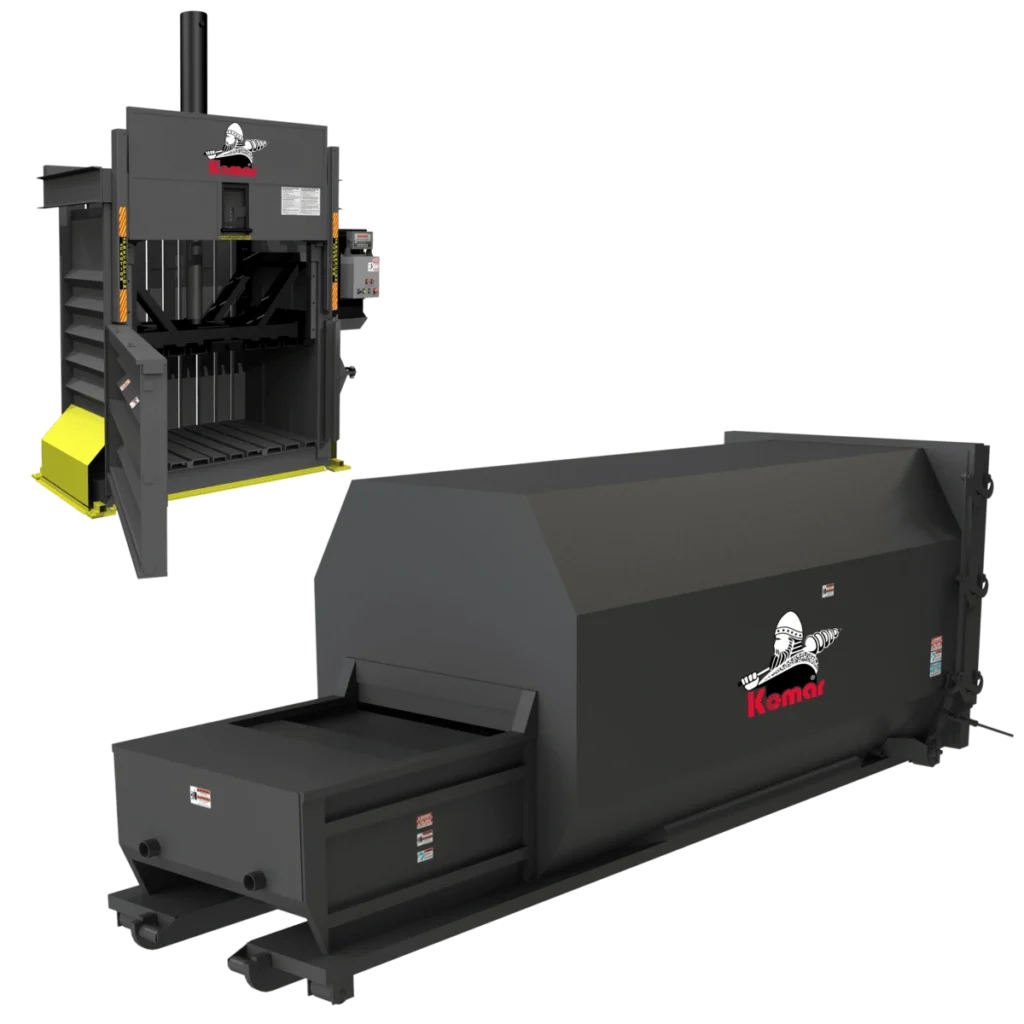
Balers vs Compactors: Which Do YOU Need?

Balers and compactors increase efficiency in your waste stream through volume reduction of your waste and recycling materials. But which machine is right for your operation?

Balers vs Compactors: Which Do YOU Need?

COMMON SELF-CONTAINED
COMPACTOR OPTIONS

“The Komar team has made this process, from start to finish, an absolute pleasure. Keep up the great customer service. We appreciate what you do!! Thanks for your help and we are absolutely LOVING our new compactor!!”

Cathy Ring, End Hunger Calvert

FAQs

A self-contained compactor is a single, sealed unit that integrates the compactor and container, designed to manage wet waste or liquid-generating materials while preventing leaks and odors.

Ideal for wet waste, food scraps, and refuse that generates liquids during compaction, such as organic material and mixed waste streams.

Self-contained compactors are removed as a complete sealed unit when full and are designed for wet waste. Stationary compactors remain fixed and pair with detachable containers for dry waste only.

Usually installed outdoors on a concrete pad, with options for dock integration or ramps. Indoor installation is possible with adequate space and planning.

Operated through a user-friendly control panel with push-button or key-switch activation, safety interlocks, and automatic compaction cycles.

Routine maintenance includes monthly checks of hydraulic fluid, seals, and moving components, with comprehensive service recommended semi-annually.

Yes. Safety features such as emergency stops, door interlocks, and overload protection ensure secure operation when used as directed.

A roll-off truck transports the entire sealed compactor and container to a disposal site, empties it, and returns it for continued use.

Most units feature fullness indicators, and many offer optional remote monitoring systems for real-time status updates.

Yes. Leasing and rental options are available to fit various budgets and timelines. Refurbished units may be offered when inventory is available.

Balers vs Compactors: Which Do YOU Need?

Vertical Baler vs. Self-Contained Compactor: Which One Is Right for Your Business?

If you’re exploring ways to streamline your waste management process, you may be deciding between two powerful pieces of equipment: a vertical baler and a self-contained compactor. While they both help reduce waste volume and improve site cleanliness, they serve very different purposes.

Choosing the right one starts with understanding your waste stream—what you’re throwing away, how much of it, and how often. In this post, we’ll walk you through the key differences and guide you on which solution might be best for your facility.

What is a Vertical Baler?

A vertical baler (also known as a downstroke baler) compresses recyclable materials like cardboard, paper, shrink wrap, and plastics into compact bales that are easy to stack, store, and transport for recycling.

Best For:

  • Facilities generating dry, recyclable waste
  • Retail stores, warehouses, distribution centers, manufacturing facilities

Pros:

  • Helps generate revenue or rebates from recycling
  • Reduces storage and hauling costs for recyclables
  • Smaller footprint than horizontal balers
  • Ideal for cardboard and plastic film

Cons:

  • Not for general waste, food, or liquids
  • Requires manual loading and tying off bales
  • Typically not automated

What is a Self-Contained Compactor?

A self-contained compactor is designed to handle wet or mixed waste, including food, liquids, and general garbage. The compactor and container are sealed as a single unit to prevent leakage and odor, making it ideal for messy or organic waste streams.

Best For:

  • Grocery stores, restaurants, hospitals, hotels, and any location handling wet waste
  • High-volume food courts or cafeterias

Pros:

  • Leak-proof design controls odor and pests
  • Suitable for food waste and liquids
  • Reduces haul frequency and dumpster overflows
  • Sealed unit helps with sanitation and compliance

Cons:

  • Doesn’t handle recyclables separately
  • Higher initial investment
  • Larger footprint and heavier when full 
Key Differences
FeatureVertical BalerSelf-Contained Compactor
Waste Type (Input)Dry recyclables (e.g., OCC, plastic)Wet, messy, mixed waste
Output TypeRecyclable balesCompacted general trash
Leak ResistanceNot designed for liquidsFully sealed, leak-resistant
Revenue PotentialCan generate recycling incomeTypically, a disposal cost center
Hauling FrequencyHaul bales as neededCompact and haul entire unit
Space RequirementCompact, upright designRequires more space (horizontal layout)
Labor RequirementsRequires tying off balesAutomated compaction cycle

How to Decide: 3 Key Questions

  1. What kind of waste does your business produce the most?
    • Mostly cardboard or plastic? → Go with a vertical baler.
    • Mostly food, liquids, or general trash? → Choose a self-contained compactor.
  2. Are you looking to recycle or dispose?
    • Looking to reduce waste disposal costs and get recycling rebates?Baler.
    • Looking to consolidate wet or unsanitary waste for easier disposal?Compactor.
  3. What’s your space and workflow like?
    • Need a small, simple solution for the back of a store?Baler.
    • Have room near a loading dock or outdoors and need containment?Self-Contained Compactor 

Conclusion

Ultimately, a Komar vertical baler is designed to save money in your operation through the generation of income of your recycled materials. Our self-contained compactors achieve this same goal by the reduction of hauling and disposal costs. Both machines accomplish this through a volume reduction method that ultimately results in a safer, cleaner, and more efficient system.

Please reach out to the Komar team for more information or specific considerations about how your waste stream could be optimized.