Komar Strengthens Its North American Platform With the Acquisition of Metro Compactor Service
Learn More →Bulky dry waste doesn’t just take up space. It disrupts workflows, ties up labor, creates safety hazards, and slowly drains budgets. Komar augers handle the heavy lifting, compacting everything from corrugated cardboard to wood waste and oversized items with minimal operator involvement. The result? Fewer haul-outs, lower disposal costs, and more room to focus on production instead of waste management.
Efficiently handles moderate to high volumes of waste with base-level shredding for consistent, tight compaction.
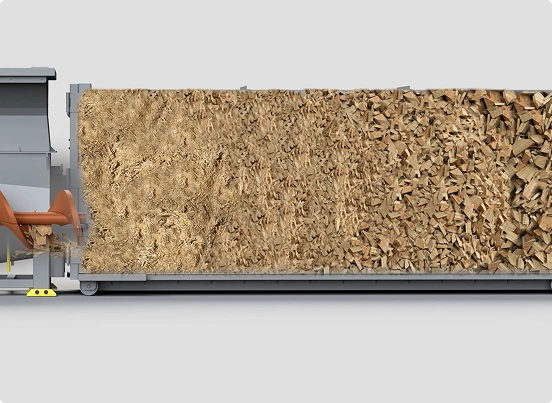
Purpose-built with enhanced shredding power to reduce wood and cardboard for maximum density.
Designed specifically for bulky, oversized materials, with increased shredding and compaction.
Ideal for high-volume general waste streams and facilities that require high processing speed and consistent throughput.
Designed for industrial-grade challenges. Made with heavy-duty materials for long-term performance you can count on.
Built to exact specs to ensure every part fits properly for smoother
operation and dependable
long-term performance.
Cast steel auger flights resist abrasion and maintain their shape under continuous use, delivering reliable performance over the long haul.
Automatic chain and bearing lubrication extends component lifespan and reduces the frequency of manual maintenance.
Continuous feed capability works with metered conveyors to overcome the limitations of batch feeding and start-stop operation.
Komar augers can be customized with specialized feeders, hoppers, and recirculation systems to match unique facility layouts, material streams, and throughput requirements. Each configuration maintains structural integrity and operational efficiency, providing a tailored solution for challenging waste management needs.
“I never hesitate to recommend our vertical trash compactor because it does everything your brochure represents it to accomplish. I can’t imagine anyone in the restaurant business not utilizing this apparatus. It really has become one of my proudest restaurant possessions. It works so smoothly that I almost feel smug when I see all the gigantic trash containers for other restaurants.”
Robert Leonardi, Leonardi's Restaurant, Fort Lauderdale, Florida
“Our facility is a 110,000-square-foot operations center for Goodwill of Southwestern Pennsylvania. We get between 1.2 to 1.5 million pounds of material a day, and tonnage increases significantly during the summer. The Komar auger has increased daily soft trash, wood pallets, and general trash efficiency by 30% and 40% with furniture. I love to give shock-and-awe tours to show off the Komar Auger, which compacts 8.5 to 9 tons into each payload.”
Bob Kagle, Director of Retail Logistics, Goodwill of Southwestern Pennsylvania
“Since installing our Komar Auger, we have improved our operations tremendously. The auger units have reduced labor from six people down to one person, who oversees the conveyor lines and compactors. We have gone from a 2-ton payload to a 10-ton-plus payload, per 40-yard container, reducing our annual pull charges by over 75%. We have less downtime and have eliminated jams due to the slow operation of the old compactors. Best of all, we had less than a one-year return on investment.”
John Hefty, Operations Manager, GameStop
“We estimate that the Komar Auger has saved us 1,300 hours of labor per year, has reduced our hauling cost by two-thirds, and has given La-Z-Boy a safer process and more floor space.”
Troy Kvingedal, Facilities Supervisor, La-Z-Boy
“Our disposal costs have dropped, which at least covers the cost of the compactors. Aside from the monetary aspect, the compactors allow the stores to be considerably cleaner. Cleanup at night is much easier because we have no trash cluttering up the back room of the store. All in all, we are very pleased with the compactors.”
Doug Gehrig, CEO, McDonald’s of Southwest Louisiana
Optimizing auger compactor performance begins with understanding the different types of auger screws and how their design influences the way materials are received, broken down, and compacted. From recyclables and packaging waste to dense industrial materials, the auger screw is the central element governing material behavior throughout the system.
Our solutions are tailored to meet the unique needs of a wide range of industries, including:
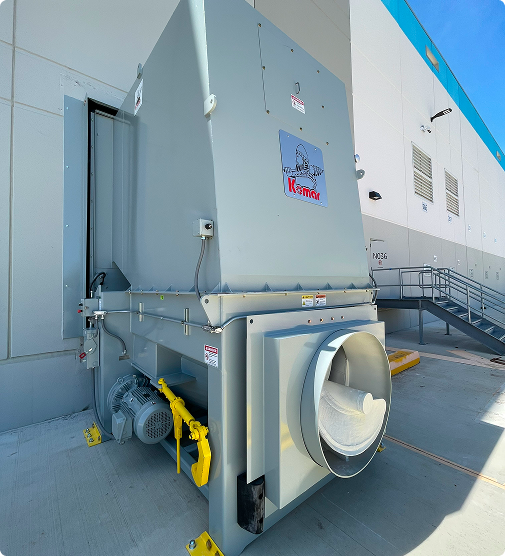
An auger compactor uses a rotating screw to compress waste or recyclables into dense material for easier handling, hauling, or recycling.
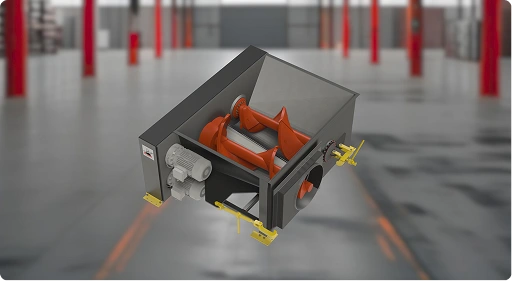
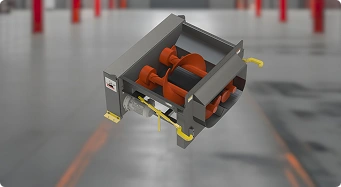
Single screws are ideal for medium to high volumes with moderate shredding needs, while dual-screws handle higher volumes, oversized materials, or increased compaction requirements.
Yes. With different screw and equipment options Komar augers are ideal for handling a variety of wood and cardboard waste streams.
It depends on waste volume, material type, and operational speed. Komar offers various lengths, diameters, and screw configurations to match facility needs.
Absolutely. Our units include interlocks, guarded access points, and clear operator controls to minimize risk.
Yes. Komar augers are designed to process continuous material flow when paired with metered conveyors.
With our automated lubrication system and sealed bearings, routine maintenance is kept to a minimum – changing out lubrication system fluid and general visual inspection for loose or worn parts (including the auger, chain, flow bars, and floor). We recommend purchasing a Preventative Maintenance plan to keep your equipment in peak operating condition.
Yes. Our technicians are trained to service Komar and non-Komar augers, ensuring your mixed fleet stays operational.
Yes. Hoppers, feeders, and specialized screws and controls can all be included to meet your unique waste stream needs. When your operations require true customization, we have a dedicated Engineered Systems Team to work with you on optimized solutions.
Yes. Komar provides operator training to ensure safe and efficient use, along with guidance on preventative maintenance.
We are a waste solutions company. With a wide array of application-specific models and advanced engineering capabilities, we look forward to guiding you to the best solution for the job.
Schedule a free waste stream evaluation to identify the right equipment and processes for your space, waste types, and volume.
Optimizing auger compactor performance begins with understanding the different types of auger screws and how their design influences the way materials are received, broken down, and compacted. From recyclables and packaging waste to dense industrial materials, the auger screw is the central element governing material behavior throughout the system.
Every auger screw is defined by two primary components:
Shaft
The cylindrical core that transfers rotational energy from the drive system to the flights. Shafts may be straight or tapered. Tapered shafts help reduce stress concentrations and promote smoother material movement through the auger.
Flights
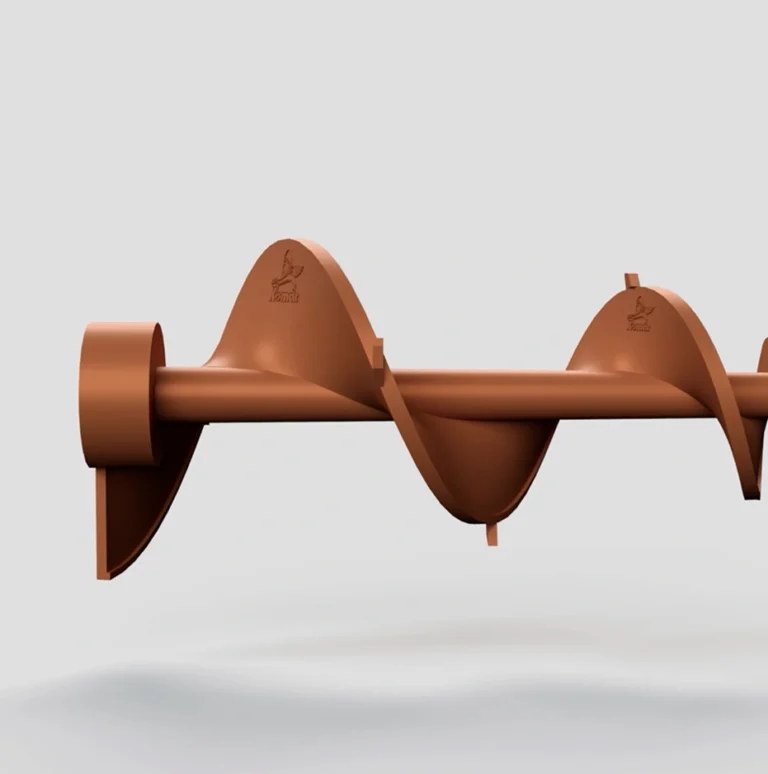
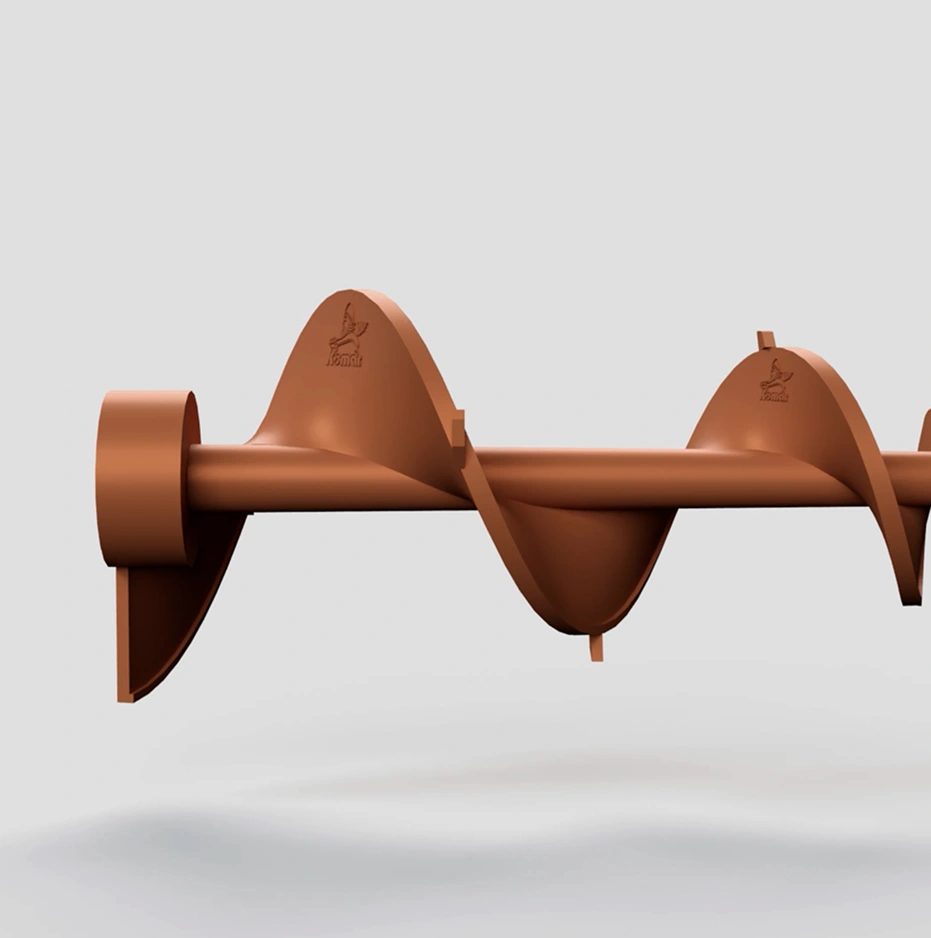
The helical surfaces extending from the shaft that move, break down, and compact material. Flight design—specifically diameter and pitch—plays a critical role in determining how material advances and compresses within the system.
Komar offers four auger screw designs and one additional rotating element to match a wide range of material, operating speed, and application demands.
Constructed with a solid tapered shaft, tapered flight diameter, and reducing flight pitch, the G Screw is Komar’s general-purpose, workhorse design. It is well suited for mixed waste streams, cardboard, and occasional wood or pallet material. Smooth flight edges minimize material grabbing and reduce the risk of wrapping.
Also built with a solid tapered shaft, tapered flight diameter, and reducing pitch, the W Screw is engineered specifically for wood waste. Hooked teeth along the outer edge of the flights assist with initial wood breakdown, reduce bridging, and help maintain consistent material movement through the processing chamber.
Designed for smooth sheets and flat materials, the Shark-Tooth Screw features trapezoidal teeth along the outer edge of the flights. These teeth aid in initial material breakdown, minimize wrapping, and help prevent bridging, ensuring steady feeding into the compaction zone.
The Straight Shaft Screw uses a straight shaft with a straight flight diameter and reducing pitch. This design supports higher processing speeds when paired with dual-compaction augers and is also well suited for lower-duty applications, such as Komar’s AC line. It is commonly used for general waste, cardboard, and select wood applications. Flight edges may be smooth or toothed depending on the specific equipment configuration and material type.
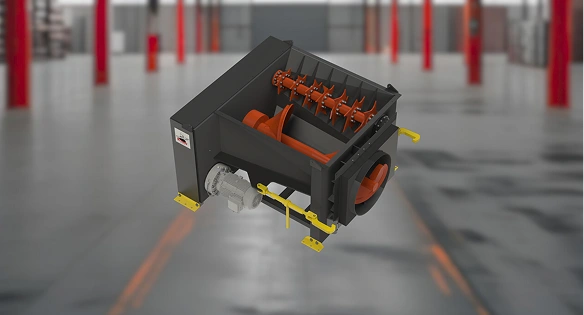
The Ripper Feeder Shaft is an independently controlled rotating element positioned above the auger screw. Built with a straight shaft and abrasion-resistant knives, it acts as a pre-processor—tearing and shredding material while assisting with consistent feeding into the auger. Adding a Ripper Feeder Shaft can significantly improve performance when processing clean cardboard, pallets, and crates.
In an auger compactor, screw design is more than a mechanical choice—it defines how material is engaged, managed, and compacted throughout the entire waste-handling system.