


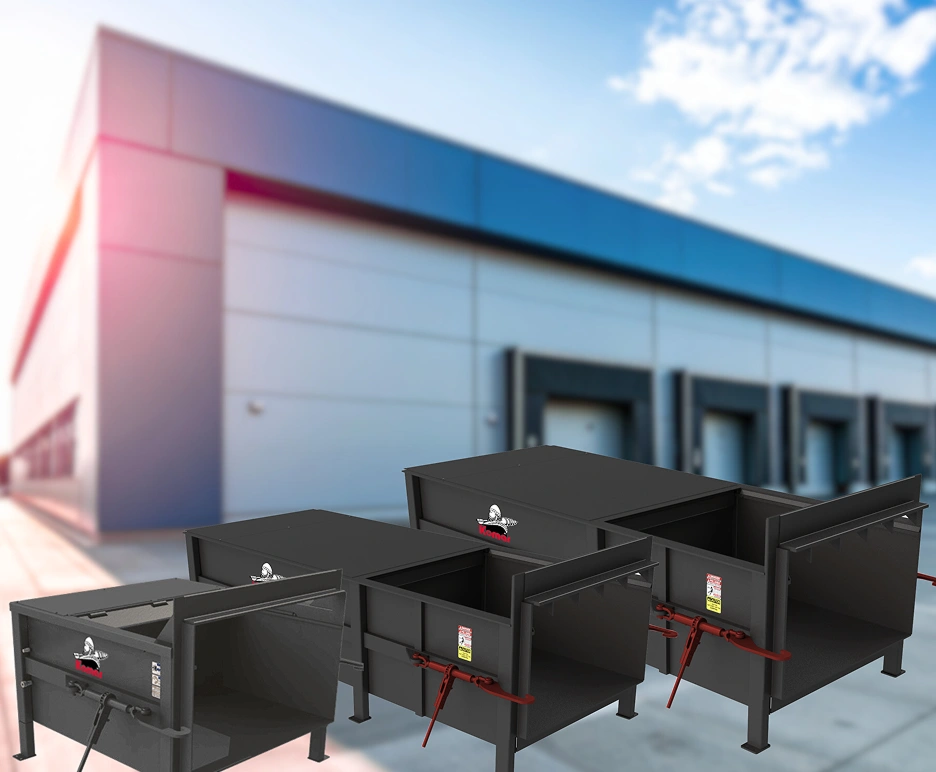
Stationary Compactors

Dry Waste disposal at scale

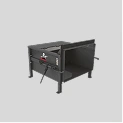
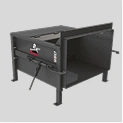
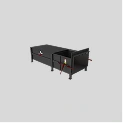
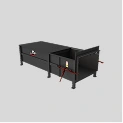
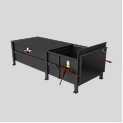
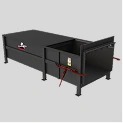
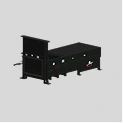
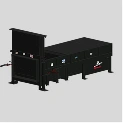
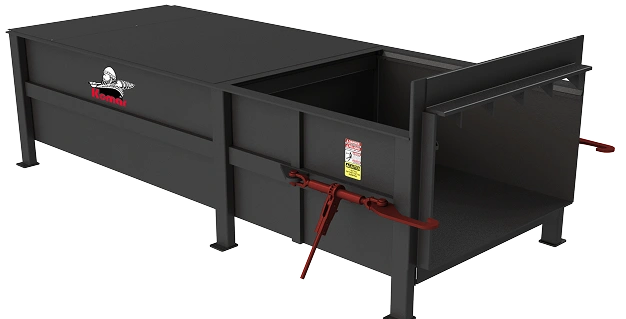
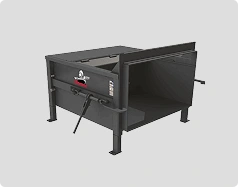
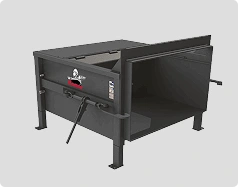
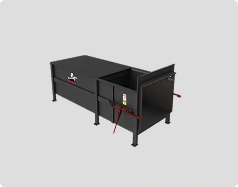
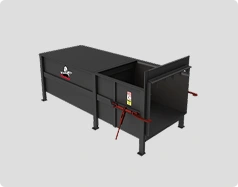
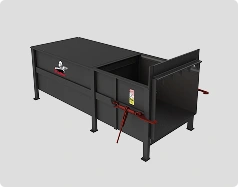
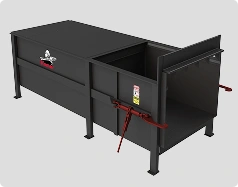
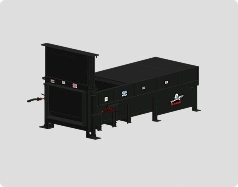
Stationary compactors provide efficient dry waste management for high-volume operations. Ideal for cardboard, paper, and packaging waste, these heavy-duty units reduce hauling costs and improve load efficiency. Options include short-profile models for tight spaces and pre-crushers for bulky materials, delivering maximum compaction and cost savings.

Product Line Overview

A compact, space-saving compactor designed for low to moderate waste volumes where installation space is limited.

C1SP

C1SP

Dual-cylinder 1 cu. yd.
short-profile compactor designed for low to moderate volume in constrained spaces

Clear Top Opening (LxW)
40"x48"
Deck Height
47.75"
Charge Box Capacity
1

C2SP

Dual-cylinder 2 cu. yd.
short-profile compactor designed for low to moderate volume in constrained spaces

Clear Top Opening (LxW)
40"x60"
Deck Height
48"
Charge Box Capacity
2

A versatile mid-range compactor ideal for general dry waste applications in retail, commercial, and light industrial settings.

C4PC

C2SD

Single-cylinder 2 cu. yd. compactor designed for dry waste in moderate to high volumes.

Clear Top Opening (LxW)
40"x60"
Deck Height
48"
Charge Box Capacity
2
C5PC

C3SD

Single-cylinder 3 cu. yd. compactor designed for dry waste in moderate to high volumes.

Clear Top Opening (LxW)
63"x60"
Deck Height
48"
Charge Box Capacity
3

A high-force compactor built for demanding environments, handling large volumes of dense, dry waste with maximum compaction efficiency.

C2HD

C2HD

Single-cylinder 2 cu. yd. compactor designed for dry waste in high volume applications.

Clear Top Opening (LxW)
40"x60"
Deck Height
48"
Charge Box Capacity
2
C3HD

C3HD

Single-cylinder 3 cu. yd. compactor designed for dry waste in high volume applications.

Clear Top Opening (LxW)
63"x60"
Deck Height
48"
Charge Box Capacity
3
C4HD

C4HD

Single-cylinder 4 cu. yd. compactor designed for dry waste in high volume applications.

Clear Top Opening (LxW)
58"x68"
Deck Height
52"
Charge Box Capacity
4

C5HD

Single-cylinder 5 cu. yd. compactor designed for dry waste in high volume applications.

Clear Top Opening (LxW)
60"x97"
Deck Height
52"
Charge Box Capacity
5

A powerful compactor equipped with a built-in crusher that crushes bulky items like pallets and furniture before compacting them, maximizing load weights and reducing haul frequency.

C2SD

C4PC

Single-cylinder 4 cu. yd. pre-crusher compactor designed for dry waste in high volume, bulky, or product destruction applications where maximum compaction forces are required.

Clear Top Opening (LxW)
68.75"x60"
Deck Height
52"
Charge Box Capacity
4
C3SD

C5PC

Single-cylinder 5 cu. yd. pre-crusher compactor designed for dry waste in high volume, bulky, or product destruction applications where maximum compaction forces are required.

Clear Top Opening (LxW)
85"x57"
Deck Height
52"
Charge Box Capacity
5

Chute-fed systems built for multi-tenant residential buildings.

C1/2SP3

Dual-cylinder 0.33 cu. yd. compactor designed for multi-tenant residential applications.

Clear Top Opening (LxW)
24"x30"
Deck Height
32"
Charge Box Capacity
0.33

C1/2SD

Single-cylinder 0.33 cu. yd. compactor designed for multi-tenant residential applications.

Clear Top Opening (LxW)
24"x30"
Deck Height
32"
Charge Box Capacity
0.33

C3/4SP

Dual-cylinder 0.50 cu. yd. compactor designed for multi-tenant residential applications.

Clear Top Opening (LxW)
24"x30"
Deck Height
33"
Charge Box Capacity
0.50
STATIONARY COMPACTORS

Key Features

Komar’s stationary compactors are engineered for durability and performance across commercial, retail, industrial, and other applications. Built with rugged steel frames and advanced hydraulics, these compactors reduce hauling costs and maximize efficiency. Options include chute-fed or short-profile models for tight spaces and pre-crushers for bulky waste.

Certified Safe

U.L. listed, ANSI compliant, ETL and CETL approved for reliable operation.

High Compaction Force

Increases load density and reduces haul frequency for cost savings.

Heavy-Duty Build

Fully welded, corrosion-resistant structural steel for long-term durability.

Custom Configurations

Multiple sizes and options for specific waste streams and facility needs.

COMMON Stationary
COMPACTOR OPTIONS

“We went from paying $18,000 to $20,000 a year for plastic removal by a local waste company to selling our compacted pots back to our manufacturers for $8,000 to $10,000 per year! 


”So… we paid for our compactor in less than a year! Every time the compactor runs, it sounds just like printing money. 


”Thanks for delivering a great product and one that does exactly what you said it would! Very refreshing to deal with an honorable company.”

John Hardiman, Managing Director, American Farms

Resource

Choosing Between a Vertical Baler, Horizontal Baler, and a Stationary Compactor

Effective waste and recycling equipment is selected through understanding, not urgency. While vertical balers, horizontal balers, and stationary compactors all reduce material volume, they serve different purposes and reflect different operational priorities.
Choosing correctly requires clarity around material value, volume, and how waste moves through your operation.

Choosing Between a Vertical Baler, Horizontal Baler, and a Stationary Compactor

Stationary Compactor Specs

Compactors

C1SP

C1SP

C2SP

C2SP
Capacity (cu. yds.)12
TypeShort-ProfileShort-Profile
Ram-Face (H×W)23″×48″30″×60″
Clear Top Opening (L×W)40″×48″40″×60″
Deck Height47.75″48″
Charge Box Capacity12
Cylinder Bore4″6″
Cylinder Rod2.5″2.5″
Cylinder Stroke32″32″
Cylinder Penetration4″4″
Normal Pressure (psi)1,2502,000
Max Pressure (psi)1,5502,300
Normal Ram Force (lbs)31,41656,549
Max Ram Force (lbs)38,95665,031
Normal Ram Face Pressure (psi)28.531.4
Max Ram Face Pressure (psi)35.336.1
Horsepower510
Pump GPM6.510.5
Cycle Time (seconds)5240
Width64″81.25″
Length71″78″
Height45.5″60.5″
Machine Weight4,0004500
Voltage120120
Electric208/230/460208/230/460
Compactors

C2SD

C2SD

C3SD

C3SD
Capacity23
TypeStandard DutyStandard Duty
Ram-Face (H×W)30″×60″32″×60″
Clear Top Opening (L×W)40″×60″63″×60″
Deck Height4848″
Charge Box Capacity23
Cylinder Bore6″6″
Cylinder Rod3″4″
Cylinder Stroke56″79″
Cylinder Penetration11″14″
Normal Pressure (psi)1,8001,800
Max Pressure (psi)2,2002,200
Normal Ram Force (lbs)50,89450,894
Max Ram Force (lbs)62,20462,204
Normal Ram Face Pressure (psi)28.326.5
Max Ram Face Pressure (psi)34.632.4
Horsepower1015
Pump GPM10.512.8
Cycle Time (seconds)6563
Width68.5″68.5″
Length125.5″173″
Height61.5″61.75″
Machine Weight5,5007,670
Voltage120120
Electric208/230/460208/230/460
Compactors C2HD
C2HD
C3HD
C3HD
C4HD
C4HD
C5HD
Capacity 2 3 4 5
Type Heavy Duty Heavy Duty Heavy Duty Heavy Duty
Ram-Face (H × W) 30″ × 60″ 32″ × 60″ 34″ × 60″ 34″ × 60″
Clear Top Opening (L × W) 40″ × 60″ 63″ × 60″ 68.75″ × 60″ 98″ × 60″
Deck Height 48″ 48″ 52″ 52″
Charge Box Capacity 2 3 4 5
Cylinder Bore 6″ 6″ 6″ 7″
Cylinder Rod 3.5″ 4″ 4″ 4″
Cylinder Stroke 56″ 79″ 84″ 114″
Cylinder Penetration 11″ 14″ 9.3″ 10.5″
Normal Pressure (psi) 2,100 1,800 2,000 2,200
Max Pressure (psi) 2,400 2,200 2,300 2,500
Normal Ram Force (lbs) 59,376 50,894 56,549 84,666
Max Ram Force (lbs) 67,858 62,204 65,031 96,211
Normal Ram Face Pressure (psi) 33 26.5 27.7 41.5
Max Ram Face Pressure (psi) 37.7 32.4 31.9 47.2
Horsepower 10 15 20 20
Pump GPM 15 12.8 15 19.2
Cycle Time (seconds) 59.5 63 64 76
Width 81.5″ 68.5″ 83.75″ 84.75″
Length 128.5″ 173″ 193″ 248.25″
Height 58.5″ 61.75″ 63″ 63″
Machine Weight 4,500 7,670 8,950 10,100
Voltage 120 120 120 120
Electric 208 / 230 / 460 208 / 230 / 460 208 / 230 / 460 208 / 230 / 460
Compactors

C4PC

C5PC

C5PC
Capacity45
TypePre-CrusherPre-Crusher
Ram-Face (H×W)34″×60″34″×60″
Clear Top Opening (L×W)57.5″×60″83.5″×60″
Deck Height52″52″
Charge Box Capacity45
Cylinder Bore6″7″
Cylinder Rod4″4″
Cylinder Stroke84″114″
Cylinder Penetration13″15″
Normal Pressure (psi)2,1002,200
Max Pressure (psi)2,4002,500
Normal Ram Force (lbs.)59,34667,872
Max Ram Force (lbs)80,77692,316
Normal Ram Face Pressure (psi)2940
Max Ram Face Pressure (psi)4046
Horsepower2020
Pump GPM19.219.2
Cycle Time (seconds)6255
Width83.75″84.75″
Length193″248.25″
Height63″63″
Machine Weight9,950 lbs11,290 lbs
Voltage120120
Electric208/230/460208/230/460
Compactors C1/2SP3 C1/2SD C3/4SP
Capacity 0.33 0.33 0.33
Type Apartment/Chute Fed Apartment/Chute Fed Apartment/Chute Fed
Ram-Face (H×W) 18"×30" 18"×30" 18"×30"
Clear Top Opening (L×W) 24"×30" 24"×30" 24"×30"
Deck Height 32.25" 32.25" 32.25"
Charge Box Capacity 0.33 0.33 0.33
Cylinder Bore 2.5" 3" 3"
Cylinder Rod 1.25" 2" 2"
Cylinder Stroke 18.5" 34" 34"
Cylinder Penetration 1" 6" 6"
Normal Pressure (psi) 1,700 1,200 1,200
Max Pressure (psi) 2,000 1,500 1,500
Normal Ram Force (lbs) 14,022 8,482 8,482
Max Ram Force (lbs) 16,500 10,603 10,603
Normal Ram Face Pressure (psi) 26 15.7 15.7
Max Ram Face Pressure (lbs) 30.6 19.6 19.6
Horsepower 3 3 3
Pump GPM 3.1 3.1 3.1
Cycle Time (seconds) 32 32 32
Width 37" 42.25" 42.25"
Length 44.1" 71.75 71.75
Height 35.75" 35.5" 35.5"
Machine Weight 2,850 3,000 3,000
Voltage 120 120 120
Electric 208/230/460 208/230/460 208/230/460

FAQs

A stationary compactor is a fixed waste management machine that compresses dry waste—such as cardboard, paper, and general trash—into a detachable container for hauling.

Acceptable materials include

  • Cardboard
  • Paper
  • Plastic
  • Dry general waste.


Avoid wet waste, food waste, hazardous materials, electronics, or large metals.

Waste is loaded into a hopper and compressed by a ram into a container, which is later hauled away when full.

No. Stationary compactors are for dry waste only. Wet or organic waste can cause damage—use a self-contained compactor instead.

Most units have a “full” indicator light or gauge. Monitor regularly to prevent overflow or jams.

Yes. Operators must be trained in safety and operation procedures in compliance with OSHA and local regulations.

  • Never bypass safety features
  • Keep clear of moving parts,
  • Lockout/tagout before maintenance
  • And ensure only trained personnel operate the unit.

Follow manufacturer guidelines. Most units require monthly or quarterly maintenance. Report issues promptly.

Yes, if properly weatherproofed and with suitable electrical and hydraulic protection.

Reduces waste volume by up to 75% (4:1 ratio), lowers haul frequency and costs, and supports sustainability by reducing emissions and improving recycling.

Choosing Between a Vertical Baler, Horizontal Baler, and a Stationary Compactor

Choosing Between a Vertical Baler, Horizontal Baler, and a Stationary Compactor

Effective waste and recycling equipment is selected through understanding, not urgency. While vertical balers, horizontal balers, and stationary compactors all reduce material volume, they serve different purposes and reflect different operational priorities.

Choosing correctly requires clarity around material value, volume, and how waste moves through your operation.


Begin with the Role of the Material

The most important question is not which machine is more powerful, but what outcome is required.

  • Balers preserve material value by forming dense, uniform bales for recycling or resale.
  • Stationary compactors consolidate waste for efficient transport and disposal.

Once the destination of the material is understood, the appropriate equipment category becomes clearer.


Vertical Balers: Measured Control for Moderate Volumes

Vertical balers compress recyclable materials into manageable bales using a vertical compaction chamber. They are typically front-loaded and operated in defined cycles.

Best suited for:

  • Cardboard (OCC)
  • Plastic film and strapping
  • Paper
  • Light mixed recyclables

Operational characteristics:

  • Smaller footprint
  • Manual or semi-automatic operation
  • Moderate throughput
  • Lower initial investment

Vertical balers are well suited to operations where volumes are predictable, labor is available, and material recovery is a priority.


Horizontal Balers: Continuous Processing for Higher Volumes

Horizontal balers are designed for facilities generating large quantities of recyclable material. They allow continuous or semi-automatic feeding and produce consistent, high-density bales.

Best suited for:

  • High volumes of:
    • Cardboard
    • Mixed Paper
    • Mixed recyclables
    • Aluminum and non-ferrous metals
    • PET and HDPE
  • Distribution and fulfillment centers
  • Manufacturing and industrial operations

Operational characteristics:

  • High throughput
  • Automated or conveyor-fed options
  • Consistent bale size and density
  • Higher capital investment

Horizontal balers are appropriate when material volumes exceed what vertical balers can efficiently manage and when minimizing labor is a priority.


Stationary Compactors: Efficiency for Disposal-Focused Waste Streams

Stationary compactors compress waste into detachable containers for hauling. They are optimized for non-recoverable materials and mixed waste streams.

Best suited for:

  • Dry industrial waste
  • Mixed packaging and residual materials
  • High-volume disposal applications

Operational characteristics:

  • High compaction ratios
  • Continuous operation
  • Reduced hauling frequency
  • Minimal material handling

When the objective is efficient waste removal rather than material recovery, stationary compactors provide the most direct solution.


Key Considerations for Selection

A disciplined evaluation should account for:

  1. Material Volume
  • Low to moderate volumes: vertical baler
  • High volumes: horizontal baler or stationary compactor
  1. Material Value
  • Recyclables with market value: balers
  • Waste destined for landfill disposal: compactors
  1. Labor and Automation
  • Available labor: vertical balers
  • Limited labor or need for automation: horizontal balers or compactors
  1. Space and Layout
  • Limited indoor space: vertical balers
  • Larger footprints: Horizontal balers and compactors
  • Dock integration: compactors
  1. Operational Intent
  • Sustainability and recycling programs: vertical balers
  • Throughput and hauling efficiency: horizontal balers or compactors
  • Long-term operational simplicity: all

The correct solution aligns with the broader system rather than addressing a single constraint.


When Multiple Systems Are Warranted

Many facilities benefit from using more than one approach:

  • Balers for recyclables
  • Stationary compactors for residual waste

This separation supports both resource recovery and disposal efficiency.


Experience as a Guide

At Komar Industries, equipment selection is guided by application knowledge developed across decades of industrial experience. By examining waste streams, facility constraints, and operational goals, we help ensure the chosen solution remains effective for years to come.


A Considered Choice

Choosing between a vertical baler, horizontal baler, and a stationary compactor is not a question of preference, but of purpose. When the role of each machine is understood within the system, the correct choice becomes clear.